Showing posts with label Nissan. Show all posts

Nissan Pathfinder, 2010

Nissan Pathfinder, 2010


Europe's best selling pick-up and its SUV sibling since its launch - the Nissan Navara and Nissan Pathfinder - have been given a mid-term boost with a number of significant enhancements designed to keep them at the top.

New V6 diesel engine
The new direct injection V6 turbodiesel has been developed by the Renault Nissan Alliance to deliver high levels of performance with strong economy, competitive emissions and class-leading refinement.

The key element of the new V6 - with an unusual vee angle of 65 degrees - is the material chosen for the engine block. Alliance development engineers chose Compacted Graphite Iron (CGI), a material that offers all the benefits of cast iron, including high levels of stiffness and noise absorption, without the weight penalty. And while CGI is heavier than a pure alloy block there is no need to add stiffening ribs or extra sound deadening material so the weight gain is comparatively modest.

The compression ratio has been lowered to 16:1 to benefit not just economy and emissions but also noise, vibration and harshness (NVH), while internal engine friction is reduced by the use of ultra smooth components such as the micro-finished forged steel used for the crankshaft.

Class leading levels of torque and highly competitive specific power outputs are delivered thanks to the adoption of a comparatively large single turbocharger, which is mounted within the vee of the engine, an intercooler, and the use of the latest generation of Bosch common-rail fuel injection. This system incorporates piezo injectors and operates at 1800 bar.

Power output is 170 kW (231PS) while the torque output of 550 Nm leads the class. Better still, peak torque is achieved from as low as 1,700 rpm and is available all the way to 2,500 rpm, while as much as 500 Nm is available from a mere 1,500 rpm. Idle speed is an exceptionally low 650 rpm with none of the vibrations and noise usually associated with a diesel.

The result is strong low-end performance with comfortably refined delivery and exemplary throttle response. In addition, the engine helps provide strong towing performance, the Nissan Pathfinder capable of towing a 3500 kg braked trailer with Nissan Navara having a 3000 kg limit.

Emissions and fuel efficiency targets included achieving Euro 5 compliance. In addition to the gains made by the changes to the combustion chamber, the V9X engine also incorporates a number of innovative features.

Among these is the adoption of an overcooled Exhaust Gas Recirculation (EGR) system which reduces NOx emissions. The system incorporates an integrated exhaust gas bypass in the EGR cooler which quickly helps to achieve the optimum temperature after start up so that the full cooling capacity can be used. This features a low temperature water circuit for the EGR cooler to reduce still further the temperature of the exhaust gas and lower carbon monoxide and hydro carbon emissions.

Equally significant is the treatment of the tailpipe emissions. The system comprises a metallic oxidation catalytic converter offering lower pressure loss compared to a ceramic system and an exothermic catalyst and a catalytic diesel particulate filter (DPF) in the same container. The latter arrangement works in conjunction with a seventh fuel injector which is positioned in the exhaust.

This is activated while the particulate filter is being regenerated - a process of which the driver is completely unaware - but significantly means the opportunity for unburnt fuel to pollute the engine oil is removed. It also allows the filter to be regenerated in low-load conditions, such as idling, and therefore achieves a high efficiency level under all driving conditions. It also helps stretch oil change intervals to 20,000 kms.

Improved 2.5 four-cylinder dCi
The existing 2.5 dCi four cylinder engine hasn't been forgotten, however, and significant improvements will cement its position as the most popular engine in the range with improvements to both overall refinement and all aspects of its performance.

Exterior changes
The revised models have been given a new look front and rear to differentiate them from their predecessors. Changes at the front include a new bonnet, revised grille and a new bumper assembly. Adding 80mm to the length of both models, the bumper is more rounded and lends a more sporting touch to the cars.

There's a new headlamp design with distinctive projector styling where Xenon lamps are fitted (Nissan Pathfinder only). Headlamps washers now pop-up from beneath body colour moulding in the bumpers. There's a new 18 inch alloy wheel to complement the existing range of 16 inch (steel and alloy) and 17 inch (alloy) designs. V6 models, meanwhile, are given a discreet V6 badge at the leading edge of both front doors while V6 Nissan Pathfinder also gain a new side moulding across the doors.

Changes at the rear of Nissan Pathfinder include a new bumper design with squared off edges to give a larger and lower mass for a more stable, tougher appearance.

The existing colour palette is changed to include two new metallic shades for Nissan Navara - Electric Blue and Blue Grey - while Blue Grey is added to Nissan Pathfinder's portfolio.

Interior changes
Most of the changes inside the cabin of both Nissan Navara and Pathfinder have been designed to boost quality and include new switchgear, revised door trims, new seat fabric, the addition of chrome highlights, revised dials and, depending on the model, the availability of Nissan Connect Premium with a new high resolution touch screen.

Typical of the attention to detail that has helped enhance quality are the door trims which have been changed to improve both the look and feel of the interior and its practicality. The armrests and door pads are more tactile to the touch and their shape has also been altered to make them more comfortable in use.

As well as improving fit and finish, the material used has also been enhanced. Practical touches mean the storage bins can now happily hold an A3 map book as well as a one-litre bottle. The rear door storage bins are now large enough to hold a standard Nissan First Aid kit.

Equipment improvements include a new Speed Limiter, which is incorporated into the existing cruise control system.
Active safety is improved with the availability of Nissan's Electronic Stability Programme (ESP) on Nissan Navara (already available on Pathfinder) which uses sensors to monitor the engine's ECU, wheel speed, steering angle, plus longitudinal and lateral G and yaw rates to anticipate and control wheel slippage.

Nissan Pathfinder, 2010

Nissan Pathfinder, 2010


Europe's best selling pick-up and its SUV sibling since its launch - the Nissan Navara and Nissan Pathfinder - have been given a mid-term boost with a number of significant enhancements designed to keep them at the top.

New V6 diesel engine
The new direct injection V6 turbodiesel has been developed by the Renault Nissan Alliance to deliver high levels of performance with strong economy, competitive emissions and class-leading refinement.

The key element of the new V6 - with an unusual vee angle of 65 degrees - is the material chosen for the engine block. Alliance development engineers chose Compacted Graphite Iron (CGI), a material that offers all the benefits of cast iron, including high levels of stiffness and noise absorption, without the weight penalty. And while CGI is heavier than a pure alloy block there is no need to add stiffening ribs or extra sound deadening material so the weight gain is comparatively modest.

The compression ratio has been lowered to 16:1 to benefit not just economy and emissions but also noise, vibration and harshness (NVH), while internal engine friction is reduced by the use of ultra smooth components such as the micro-finished forged steel used for the crankshaft.

Class leading levels of torque and highly competitive specific power outputs are delivered thanks to the adoption of a comparatively large single turbocharger, which is mounted within the vee of the engine, an intercooler, and the use of the latest generation of Bosch common-rail fuel injection. This system incorporates piezo injectors and operates at 1800 bar.

Power output is 170 kW (231PS) while the torque output of 550 Nm leads the class. Better still, peak torque is achieved from as low as 1,700 rpm and is available all the way to 2,500 rpm, while as much as 500 Nm is available from a mere 1,500 rpm. Idle speed is an exceptionally low 650 rpm with none of the vibrations and noise usually associated with a diesel.

The result is strong low-end performance with comfortably refined delivery and exemplary throttle response. In addition, the engine helps provide strong towing performance, the Nissan Pathfinder capable of towing a 3500 kg braked trailer with Nissan Navara having a 3000 kg limit.

Emissions and fuel efficiency targets included achieving Euro 5 compliance. In addition to the gains made by the changes to the combustion chamber, the V9X engine also incorporates a number of innovative features.

Among these is the adoption of an overcooled Exhaust Gas Recirculation (EGR) system which reduces NOx emissions. The system incorporates an integrated exhaust gas bypass in the EGR cooler which quickly helps to achieve the optimum temperature after start up so that the full cooling capacity can be used. This features a low temperature water circuit for the EGR cooler to reduce still further the temperature of the exhaust gas and lower carbon monoxide and hydro carbon emissions.

Equally significant is the treatment of the tailpipe emissions. The system comprises a metallic oxidation catalytic converter offering lower pressure loss compared to a ceramic system and an exothermic catalyst and a catalytic diesel particulate filter (DPF) in the same container. The latter arrangement works in conjunction with a seventh fuel injector which is positioned in the exhaust.

This is activated while the particulate filter is being regenerated - a process of which the driver is completely unaware - but significantly means the opportunity for unburnt fuel to pollute the engine oil is removed. It also allows the filter to be regenerated in low-load conditions, such as idling, and therefore achieves a high efficiency level under all driving conditions. It also helps stretch oil change intervals to 20,000 kms.

Improved 2.5 four-cylinder dCi
The existing 2.5 dCi four cylinder engine hasn't been forgotten, however, and significant improvements will cement its position as the most popular engine in the range with improvements to both overall refinement and all aspects of its performance.

Exterior changes
The revised models have been given a new look front and rear to differentiate them from their predecessors. Changes at the front include a new bonnet, revised grille and a new bumper assembly. Adding 80mm to the length of both models, the bumper is more rounded and lends a more sporting touch to the cars.

There's a new headlamp design with distinctive projector styling where Xenon lamps are fitted (Nissan Pathfinder only). Headlamps washers now pop-up from beneath body colour moulding in the bumpers. There's a new 18 inch alloy wheel to complement the existing range of 16 inch (steel and alloy) and 17 inch (alloy) designs. V6 models, meanwhile, are given a discreet V6 badge at the leading edge of both front doors while V6 Nissan Pathfinder also gain a new side moulding across the doors.

Changes at the rear of Nissan Pathfinder include a new bumper design with squared off edges to give a larger and lower mass for a more stable, tougher appearance.

The existing colour palette is changed to include two new metallic shades for Nissan Navara - Electric Blue and Blue Grey - while Blue Grey is added to Nissan Pathfinder's portfolio.

Interior changes
Most of the changes inside the cabin of both Nissan Navara and Pathfinder have been designed to boost quality and include new switchgear, revised door trims, new seat fabric, the addition of chrome highlights, revised dials and, depending on the model, the availability of Nissan Connect Premium with a new high resolution touch screen.

Typical of the attention to detail that has helped enhance quality are the door trims which have been changed to improve both the look and feel of the interior and its practicality. The armrests and door pads are more tactile to the touch and their shape has also been altered to make them more comfortable in use.

As well as improving fit and finish, the material used has also been enhanced. Practical touches mean the storage bins can now happily hold an A3 map book as well as a one-litre bottle. The rear door storage bins are now large enough to hold a standard Nissan First Aid kit.

Equipment improvements include a new Speed Limiter, which is incorporated into the existing cruise control system.
Active safety is improved with the availability of Nissan's Electronic Stability Programme (ESP) on Nissan Navara (already available on Pathfinder) which uses sensors to monitor the engine's ECU, wheel speed, steering angle, plus longitudinal and lateral G and yaw rates to anticipate and control wheel slippage.

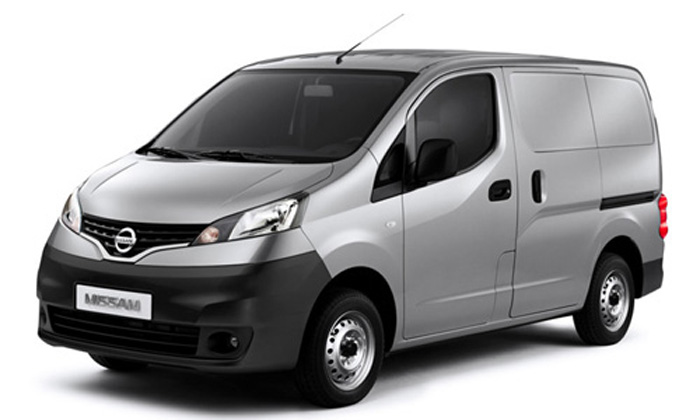
Nissan NV200, 2010

Nissan NV200, 2010


The designed from the outset as both a commercial and a passenger vehicle, the Nissan NV200 brings new levels of space, comfort and practicality to the small van market.

Maximised cargo area
Nissan NV200 uses innovative packaging ideas to create the largest and most practical cargo area in its class. Although a little under 4.4m in overall length, the van version of the Nissan NV200 has a load bay that's more than 2m long (2040mm).

With front-wheel drive and the adoption of a highly compact rear suspension system, the Nissan NV200 can house two standard Euro pallets in the cargo area at a time. At 1.84m high NV200 is no taller than its rivals, while at 520mm from ground level, the floor itself is the lowest in the class to ease loading, helping to boost the cargo volume to 4.1m3. Maximum payload is 771kg.

A spacious interior
A large cargo area is a vital attribute for a van, of course, but the generous interior dimensions of Nissan NV200 also translate into ample passenger space in the Combi version.

Unlike some other manufacturers that fit removable seats - which are invariably heavy to lift and need to be stored elsewhere when not in use - the seats in the Combi stay with the vehicle at all times. The middle row backrest has a 60/40 split to increase versatility and the entire assembly tumbles forward to fold flat against the front seats, while the rear pair fold individually to either side of the load area.
Throughout the creation of Nissan NV200, attention has been paid to ensuring the highest levels of quality with shut lines and panel gaps in line with the expectations of passenger car buyers.

Road car platform
Built on a modified version of Nissan's B Platform, NV200 has fully independent strut type front suspension mounted on a separate subframe and a compact and lightweight yet robust wide leaf spring rear axle.
The performance comes from a choice of two engines, one petrol and one diesel.
The petrol version will be powered by Nissan's renowned all aluminium 1.6-litre HR16 engine, as found in Micra, Note and Qashqai. Displacing 1,598cc, the 16-valve unit develops 79kW (108PS) and 153Nm of torque and is mated to a five-speed manual transmission.

The diesel, found on Note and Micra, is Alliance partner Renault's acclaimed 8-valve 1.5 dCi (K9K) 1,461cc engine. Developing 200 Nm of torque and 63kW (86PS), it offers an ideal blend of performance, refinement and fuel economy. Power is transmitted through a five-speed gearbox.
To create more space in the cockpit, the gearlever extends not from the floor but from the two-tone wrap around centre console. Above the gearlever, the centre section houses the heating and ventilation controls and the double DIN radio slot. Heating and ventilation extends to all three rows of seats.

Well equipped
The Nissan NV200 is availble with an optional rear view parking camera, a first for a van in this segment, while the cabin is full of storage spaces, pockets and cup/bottle holders. There is also a secret storage space large enough to hide camera, mobile phones or vital documents within the upper portion of the glovebox.

Joining the parking camera, other car-like items of standard or optional equipment include features such as Nissan's Intelligent Key, power windows and ESP. Safety equipment includes anti-lock brakes with brake assist (BA) and electronic brakeforce distribution (EBD) as standard. Driver and passenger airbags are also standard with side bags available as an option.

Low cost of ownership
Cost of ownership is projected to be among the lowest in the class thanks in part to the low running costs and high efficiency of the engines and drivetrains, but also thanks to the safety structure which helps to minimise crash damage to vulnerable under bonnet parts such as the radiator.
nit.

Nissan NV200, 2010

Nissan NV200, 2010


The designed from the outset as both a commercial and a passenger vehicle, the Nissan NV200 brings new levels of space, comfort and practicality to the small van market.

Maximised cargo area
Nissan NV200 uses innovative packaging ideas to create the largest and most practical cargo area in its class. Although a little under 4.4m in overall length, the van version of the Nissan NV200 has a load bay that's more than 2m long (2040mm).

With front-wheel drive and the adoption of a highly compact rear suspension system, the Nissan NV200 can house two standard Euro pallets in the cargo area at a time. At 1.84m high NV200 is no taller than its rivals, while at 520mm from ground level, the floor itself is the lowest in the class to ease loading, helping to boost the cargo volume to 4.1m3. Maximum payload is 771kg.

A spacious interior
A large cargo area is a vital attribute for a van, of course, but the generous interior dimensions of Nissan NV200 also translate into ample passenger space in the Combi version.

Unlike some other manufacturers that fit removable seats - which are invariably heavy to lift and need to be stored elsewhere when not in use - the seats in the Combi stay with the vehicle at all times. The middle row backrest has a 60/40 split to increase versatility and the entire assembly tumbles forward to fold flat against the front seats, while the rear pair fold individually to either side of the load area.
Throughout the creation of Nissan NV200, attention has been paid to ensuring the highest levels of quality with shut lines and panel gaps in line with the expectations of passenger car buyers.

Road car platform
Built on a modified version of Nissan's B Platform, NV200 has fully independent strut type front suspension mounted on a separate subframe and a compact and lightweight yet robust wide leaf spring rear axle.
The performance comes from a choice of two engines, one petrol and one diesel.
The petrol version will be powered by Nissan's renowned all aluminium 1.6-litre HR16 engine, as found in Micra, Note and Qashqai. Displacing 1,598cc, the 16-valve unit develops 79kW (108PS) and 153Nm of torque and is mated to a five-speed manual transmission.

The diesel, found on Note and Micra, is Alliance partner Renault's acclaimed 8-valve 1.5 dCi (K9K) 1,461cc engine. Developing 200 Nm of torque and 63kW (86PS), it offers an ideal blend of performance, refinement and fuel economy. Power is transmitted through a five-speed gearbox.
To create more space in the cockpit, the gearlever extends not from the floor but from the two-tone wrap around centre console. Above the gearlever, the centre section houses the heating and ventilation controls and the double DIN radio slot. Heating and ventilation extends to all three rows of seats.

Well equipped
The Nissan NV200 is availble with an optional rear view parking camera, a first for a van in this segment, while the cabin is full of storage spaces, pockets and cup/bottle holders. There is also a secret storage space large enough to hide camera, mobile phones or vital documents within the upper portion of the glovebox.

Joining the parking camera, other car-like items of standard or optional equipment include features such as Nissan's Intelligent Key, power windows and ESP. Safety equipment includes anti-lock brakes with brake assist (BA) and electronic brakeforce distribution (EBD) as standard. Driver and passenger airbags are also standard with side bags available as an option.

Low cost of ownership
Cost of ownership is projected to be among the lowest in the class thanks in part to the low running costs and high efficiency of the engines and drivetrains, but also thanks to the safety structure which helps to minimise crash damage to vulnerable under bonnet parts such as the radiator.
nit.

Nissan Navara, 2010

Nissan Navara, 2010


New V6 diesel engine
The new direct injection V6 turbodiesel has been developed by the Renault Nissan Alliance to deliver high levels of performance with strong economy, competitive emissions and class-leading refinement.

The key element of the new V6 - with an unusual vee angle of 65 degrees - is the material chosen for the engine block. Alliance development engineers chose Compacted Graphite Iron (CGI), a material that offers all the benefits of cast iron, including high levels of stiffness and noise absorption, without the weight penalty. And while CGI is heavier than a pure alloy block there is no need to add stiffening ribs or extra sound deadening material so the weight gain is comparatively modest.

Power output is 170 kW (231PS) while the torque output of 550 Nm leads the class. Better still, peak torque is achieved from as low as 1,700 rpm and is available all the way to 2,500 rpm, while as much as 500 Nm is available from a mere 1,500 rpm. Idle speed is an exceptionally low 650 rpm with none of the vibrations and noise usually associated with a diesel.

Improved 2.5 four-cylinder dCi
The existing 2.5 dCi four cylinder engine hasn't been forgotten, however, and significant improvements will cement its position as the most popular engine in the range with improvements to both overall refinement and all aspects of its performance.

Exterior changes
The revised models have been given a new look front and rear to differentiate them from their predecessors. Changes at the front include a new bonnet, revised grille and a new bumper assembly. Adding 80mm to the length of both models, the bumper is more rounded and lends a more sporting touch to the cars.

Interior changes
Most of the changes inside the cabin of both Nissan Navara and Pathfinder have been designed to boost quality and include new switchgear, revised door trims, new seat fabric, the addition of chrome highlights, revised dials and, depending on the model, the availability of Nissan Connect Premium with a new high resolution touch screen.

Switchgear changes include a new, easier to use, all-wheel drive command control switch on Nissan Pathfinder while the steering wheel controls for the phone and audio are now illuminated. Chrome finishers have been added to the automatic transmission surround and, depending on the model grade, to the instrument binnacle. There's a new storage box on the centre console with a damped lid while SE and LE versions also benefit from 'Fine Vision Meter' dials with a crisper appearance. LE versions of Nissan Pathfinder now have the option of black or light biscuit leather trim.

Equipment improvements include a new Speed Limiter, which is incorporated into the existing cruise control system.

Active safety is improved with the availability of Nissan's Electronic Stability Programme (ESP) on Nissan Navara (already available on Pathfinder) which uses sensors to monitor the engine's ECU, wheel speed, steering angle, plus longitudinal and lateral G and yaw rates to anticipate and control wheel slippage.

Nissan Connect Premium, the brand's new integrated navigation, communication and music system is an optional extra. Simple and quick in use, the 40GB hard drive-based system has a high resolution touch screen with a 3D Birdview display while the map coverage is now extended to Russia, Turkey and Eastern Europe. A new intuitive multi-function controller is fitted and the system also incorporates RDS-TMS live traffic updates and rich content from Michelin.

Nissan Navara, 2010

Nissan Navara, 2010


New V6 diesel engine
The new direct injection V6 turbodiesel has been developed by the Renault Nissan Alliance to deliver high levels of performance with strong economy, competitive emissions and class-leading refinement.

The key element of the new V6 - with an unusual vee angle of 65 degrees - is the material chosen for the engine block. Alliance development engineers chose Compacted Graphite Iron (CGI), a material that offers all the benefits of cast iron, including high levels of stiffness and noise absorption, without the weight penalty. And while CGI is heavier than a pure alloy block there is no need to add stiffening ribs or extra sound deadening material so the weight gain is comparatively modest.

Power output is 170 kW (231PS) while the torque output of 550 Nm leads the class. Better still, peak torque is achieved from as low as 1,700 rpm and is available all the way to 2,500 rpm, while as much as 500 Nm is available from a mere 1,500 rpm. Idle speed is an exceptionally low 650 rpm with none of the vibrations and noise usually associated with a diesel.

Improved 2.5 four-cylinder dCi
The existing 2.5 dCi four cylinder engine hasn't been forgotten, however, and significant improvements will cement its position as the most popular engine in the range with improvements to both overall refinement and all aspects of its performance.

Exterior changes
The revised models have been given a new look front and rear to differentiate them from their predecessors. Changes at the front include a new bonnet, revised grille and a new bumper assembly. Adding 80mm to the length of both models, the bumper is more rounded and lends a more sporting touch to the cars.

Interior changes
Most of the changes inside the cabin of both Nissan Navara and Pathfinder have been designed to boost quality and include new switchgear, revised door trims, new seat fabric, the addition of chrome highlights, revised dials and, depending on the model, the availability of Nissan Connect Premium with a new high resolution touch screen.

Switchgear changes include a new, easier to use, all-wheel drive command control switch on Nissan Pathfinder while the steering wheel controls for the phone and audio are now illuminated. Chrome finishers have been added to the automatic transmission surround and, depending on the model grade, to the instrument binnacle. There's a new storage box on the centre console with a damped lid while SE and LE versions also benefit from 'Fine Vision Meter' dials with a crisper appearance. LE versions of Nissan Pathfinder now have the option of black or light biscuit leather trim.

Equipment improvements include a new Speed Limiter, which is incorporated into the existing cruise control system.

Active safety is improved with the availability of Nissan's Electronic Stability Programme (ESP) on Nissan Navara (already available on Pathfinder) which uses sensors to monitor the engine's ECU, wheel speed, steering angle, plus longitudinal and lateral G and yaw rates to anticipate and control wheel slippage.

Nissan Connect Premium, the brand's new integrated navigation, communication and music system is an optional extra. Simple and quick in use, the 40GB hard drive-based system has a high resolution touch screen with a 3D Birdview display while the map coverage is now extended to Russia, Turkey and Eastern Europe. A new intuitive multi-function controller is fitted and the system also incorporates RDS-TMS live traffic updates and rich content from Michelin.

2011 Nissan NISMO 370Z


2011 Nissan NISMO 370Z

The dynamic Nissan NISMO 370Z, a tuner-Z® enthusiast’s dream and the most powerful production Z® ever offered, enters its third year in 2011 – again offering 350 horsepower, racing-inspired exterior and interior styling, a specially tuned suspension and unique super-lightweight forged alloy wheels.

The limited production NISMO 370Z is offered in one completely equipped model with a close-ratio 6-speed manual transmission only and in a choice of five exterior colors, including one new exterior color for 2011: Gun Metallic.

Advanced VVEL V6 and Tuned Suspension Come Standard
Every NISMO 370Z starts with the unmatched foundation of an advanced Nissan FM (Front Midship) platform, refined 4-wheel independent suspension and 3.7-liter DOHC V6 engine with Variable Valve Event and Lift Control (VVEL). The VVEL system helps optimize intake valve open/close movements, allowing the needed air to be sent promptly to the combustion chamber at the precisely optimized time.


For its use in the NISMO 370Z, the 3.7-liter VQ-series V6 produces 350 hp @ 7,400 rpm and 276 lb-ft of torque @ 5,200 rpm. The NISMO Z®’s enhanced engine power and acceleration is provided through use of an exclusive H-configured exhaust system design and muffler tuning, along with optimized ECM (Engine Computer Module) control. The NISMO 370Z is offered with only one transmission, a close-ratio 6-speed manual with Nissan’s “SynchroRev Match” synchronized downshift rev matching system.


The NISMO 370Z rides on unique 5-spoke Nissan-branded 19-inch RAYS forged aluminum-alloy wheels (19x9.5-inch front, 19x10.5-inch rear) mounted with Yokohama ADVAN Sport Y-rated high-performance tires (P245/40ZR19 front, P285/35ZR19 rear).

The NISMO 370Z has an overall length of 173.4 inches – 6.2 inches longer than the standard 370Z Coupe. Special side sills and a unique rear bumper help control airflow under the vehicle, while the functional rear spoiler increases downforce.

Like the standard 370Z Coupe, the NISMO 370Z exterior also includes a wide stance, sculptural fenders, upswept quarter windows, bold “boomerang” shaped headlights and taillights, vertical door handles, heated outside mirrors, and aluminum hood, door panels and hatchback. The headlights are a High Intensity Discharge (HID) bi-functional xenon design with an auto on/off feature. The NISMO 370Z is offered in five exterior colors: Pearl White, Brilliant Silver, Magnetic Black, Solid Red and the new Gun Metallic.


Standard interior comfort and convenience features include Nissan Intelligent Key™ with Push Button Start, power windows with one-touch auto up/down feature, power door locks with auto-lock feature, a center console box with a non-intrusive cover design, automatic climate control, rear window defroster with timer, two 12¬volt power outlets, four cupholders (two in door panels, two in center console), dual overhead map lights and a AM/FM/CD/AUX 4-speaker audio system with illuminated steering wheel-mounted controls.

Nissan GT-R SpecV, 2010

Nissan GT-R SpecV, 2010


The SpecV model includes unique body, interior and performance equipment and modifications, raising the GT-R's unmatched performance to even higher levels. Developed around the multi-dimensional Nissan GT-R sports car, which was introduced just more than one year ago to universal global acclaim, the new SpecV model builds on the original's "ultimate supercar that anyone can enjoy driving anywhere, at anytime" philosophy - taking it to an entirely new level of "oneness between man and machine."

The Nissan GT-R SpecV's new exterior features include a carbon fiber rear spoiler, a carbon fiber grille, and carbon fiber brake ducts. The SpecV is available exclusively in Ultimate Black Opal (RP) body color. Inside, the SpecV's unique two-seat interior (non-SpecV GT-R models also include a two-place rear seat) offers special Recaro carbon fiber bucket seats, while carbon fiber insets embellish the rear center storage box, instrument panel and other trim areas.

The Performance is enhanced with a new high gear boost control device, which momentarily increases boost of the engine's twin turbochargers for greater torque in the intermediate-to-high speed ranges to provide a more powerful feeling of acceleration, while also allowing the engine to operate at a lower speed for improved fuel economy. Other modifications include a titanium-coated exhaust system and carbon-ceramic brakes that provide powerful stopping performance.

The Nissan GT-R SpecV is also equipped with lightweight, racing-style forged aluminum wheels that were developed for this model and have been sold by Nissan Motorsports International (NISMO) since September 2008. The lighter unsprung weight provided by the new wheels, together with the enhanced braking capability, an exclusive suspension and high-grip tires, combine to deliver the SpecV's exceptional performance.

Nissan GT-R SpecV, 2010

Nissan GT-R SpecV, 2010


The SpecV model includes unique body, interior and performance equipment and modifications, raising the GT-R's unmatched performance to even higher levels. Developed around the multi-dimensional Nissan GT-R sports car, which was introduced just more than one year ago to universal global acclaim, the new SpecV model builds on the original's "ultimate supercar that anyone can enjoy driving anywhere, at anytime" philosophy - taking it to an entirely new level of "oneness between man and machine."

The Nissan GT-R SpecV's new exterior features include a carbon fiber rear spoiler, a carbon fiber grille, and carbon fiber brake ducts. The SpecV is available exclusively in Ultimate Black Opal (RP) body color. Inside, the SpecV's unique two-seat interior (non-SpecV GT-R models also include a two-place rear seat) offers special Recaro carbon fiber bucket seats, while carbon fiber insets embellish the rear center storage box, instrument panel and other trim areas.

The Performance is enhanced with a new high gear boost control device, which momentarily increases boost of the engine's twin turbochargers for greater torque in the intermediate-to-high speed ranges to provide a more powerful feeling of acceleration, while also allowing the engine to operate at a lower speed for improved fuel economy. Other modifications include a titanium-coated exhaust system and carbon-ceramic brakes that provide powerful stopping performance.

The Nissan GT-R SpecV is also equipped with lightweight, racing-style forged aluminum wheels that were developed for this model and have been sold by Nissan Motorsports International (NISMO) since September 2008. The lighter unsprung weight provided by the new wheels, together with the enhanced braking capability, an exclusive suspension and high-grip tires, combine to deliver the SpecV's exceptional performance.

Nissan Denki Cube Concept. 2010

Nissan Denki Cube Concept. 2010


The Denki Cube Concept is a fun way to expose American buyers to one of Nissan’s most popular home market cars at a time when fuel economy and packaging efficiency are on a lot of people’s minds.
The Denki Cube Concept is boxy yet charming, fashionable and functional, and completely tuned in to today’s needs for enjoyable efficiency.”

About the Denki Cube Concept
In creating the Denki Cube Concept, the designers started with a well-defined canvas, the current-generation Nissan Cube.
The iconic Cube has always been the antithesis of traditional automotive style – square, minimalist, asymmetrical and humble – yet also warm, relaxing, practical and undeniably charming.  To this solid foundation, the Denki Cube adds a new EV powertrain and unique exterior and interior treatments.

The Denki Cube Concept’s exterior features fresh front and rear styling treatments, including a new “electric themed” front grille design with an AC power charging port, a radical “lightning” headlight design and new bumpers and turn signal lamps.
In the rear, the signature Cube asymmetrical rear quarter area (with wraparound glass on one side) has been enhanced by a new bumper with hidden taillights.  The roof sheet metal has been replaced with a full fixed glass panel that enhances the interior’s sense of wide-open space.  The Denki Cube Concept exterior also features new door mirrors and unique 16-inch wheel covers. 
The finishing touch is provided by a special white pearl paint and graphics.

The inside, the Denki Cube Concept reflects the designers’ intention of creating a relaxing, moving social hub, like a favorite room in an owner’s house.  Though the production Cube offers three rows of seating, the Denki Cube Concept offers only two rows and the wheelbase has been stretched 9.4 inches in order to better accommodate the lithium-ion battery cells.  The newly designed front and second row seats are joined by a revised instrument panel with an IP-mounted shift button, a special steering wheel design and new door panel and cargo area trim.

The biggest transformation from production Cube to Denki Cube Concept is one that isn’t visible – the replacement of the standard 1.3-liter inline 4-cylinder gasoline engine with an electric motor and laminated lithium-ion batteries located under the floor and seats.  The laminated structure and unique material technology offer more power, energy and battery stability, as well as compact size and packaging flexibility, versus conventional cylindrical batteries.

Nissan’s compact lithium-ion battery technology, one of the company’s traditional strengths, provides batteries with twice as much energy compared with a conventional cylindrical battery of the same type and safer operation due to the cause of chemically stable spine-structured manganese for the electrode material.  In order to better leverage Nissan’s lithium-ion battery capabilities, a new company, Automotive Energy Supply Corp. (AESC), was jointly established with NEC Corp. and NEC Tokin Corp. – with the goal of dramatically enhancing future battery performance and reducing battery costs.

About Nissan Green Program 2010
Nissan Motor Co., Ltd.’s (NML) mid-term environmental action plan, Nissan Green Program 2010 (NGP 2010), is designed to fulfill Nissan’s environmental philosophy of “symbiosis of people, vehicles and nature” and contribute to a sustainable mobile society.  NGP 2010 is specifically focused on reducing CO2 emissions both from Nissan products as well as from day-to-day corporate activities.

The Nissan is focused on three core areas related to the environment: reducing CO2 emissions; reducing exhaust emissions;
and accelerating recycling efforts.
Highlights of Nissan Green Program 2010 :
    * Incorporating CO2 reduction as one of the key management performance indicators.
    * Launch a “three-liter car” with a target of 2010; a gasoline-fueled car that runs 100 kilometers on three liters of fuel.
    * Expand availability of Flexible Fuel Vehicles (FFV) within the next three years.
    * Launch a Nissan electric vehicle early in the next decade.
    * Develop an original Nissan hybrid vehicle targeted for launch in FY2010.
    * Accelerate development of plug-in hybrid technology.
    * By 2010, reduce CO2 emissions from global manufacturing plants by 7%  (per unit) compared to 2005.

Nissan Denki Cube Concept. 2010

Nissan Denki Cube Concept. 2010


The Denki Cube Concept is a fun way to expose American buyers to one of Nissan’s most popular home market cars at a time when fuel economy and packaging efficiency are on a lot of people’s minds.
The Denki Cube Concept is boxy yet charming, fashionable and functional, and completely tuned in to today’s needs for enjoyable efficiency.”

About the Denki Cube Concept
In creating the Denki Cube Concept, the designers started with a well-defined canvas, the current-generation Nissan Cube.
The iconic Cube has always been the antithesis of traditional automotive style – square, minimalist, asymmetrical and humble – yet also warm, relaxing, practical and undeniably charming.  To this solid foundation, the Denki Cube adds a new EV powertrain and unique exterior and interior treatments.

The Denki Cube Concept’s exterior features fresh front and rear styling treatments, including a new “electric themed” front grille design with an AC power charging port, a radical “lightning” headlight design and new bumpers and turn signal lamps.
In the rear, the signature Cube asymmetrical rear quarter area (with wraparound glass on one side) has been enhanced by a new bumper with hidden taillights.  The roof sheet metal has been replaced with a full fixed glass panel that enhances the interior’s sense of wide-open space.  The Denki Cube Concept exterior also features new door mirrors and unique 16-inch wheel covers. 
The finishing touch is provided by a special white pearl paint and graphics.

The inside, the Denki Cube Concept reflects the designers’ intention of creating a relaxing, moving social hub, like a favorite room in an owner’s house.  Though the production Cube offers three rows of seating, the Denki Cube Concept offers only two rows and the wheelbase has been stretched 9.4 inches in order to better accommodate the lithium-ion battery cells.  The newly designed front and second row seats are joined by a revised instrument panel with an IP-mounted shift button, a special steering wheel design and new door panel and cargo area trim.

The biggest transformation from production Cube to Denki Cube Concept is one that isn’t visible – the replacement of the standard 1.3-liter inline 4-cylinder gasoline engine with an electric motor and laminated lithium-ion batteries located under the floor and seats.  The laminated structure and unique material technology offer more power, energy and battery stability, as well as compact size and packaging flexibility, versus conventional cylindrical batteries.

Nissan’s compact lithium-ion battery technology, one of the company’s traditional strengths, provides batteries with twice as much energy compared with a conventional cylindrical battery of the same type and safer operation due to the cause of chemically stable spine-structured manganese for the electrode material.  In order to better leverage Nissan’s lithium-ion battery capabilities, a new company, Automotive Energy Supply Corp. (AESC), was jointly established with NEC Corp. and NEC Tokin Corp. – with the goal of dramatically enhancing future battery performance and reducing battery costs.

About Nissan Green Program 2010
Nissan Motor Co., Ltd.’s (NML) mid-term environmental action plan, Nissan Green Program 2010 (NGP 2010), is designed to fulfill Nissan’s environmental philosophy of “symbiosis of people, vehicles and nature” and contribute to a sustainable mobile society.  NGP 2010 is specifically focused on reducing CO2 emissions both from Nissan products as well as from day-to-day corporate activities.

The Nissan is focused on three core areas related to the environment: reducing CO2 emissions; reducing exhaust emissions;
and accelerating recycling efforts.
Highlights of Nissan Green Program 2010 :
    * Incorporating CO2 reduction as one of the key management performance indicators.
    * Launch a “three-liter car” with a target of 2010; a gasoline-fueled car that runs 100 kilometers on three liters of fuel.
    * Expand availability of Flexible Fuel Vehicles (FFV) within the next three years.
    * Launch a Nissan electric vehicle early in the next decade.
    * Develop an original Nissan hybrid vehicle targeted for launch in FY2010.
    * Accelerate development of plug-in hybrid technology.
    * By 2010, reduce CO2 emissions from global manufacturing plants by 7%  (per unit) compared to 2005.
Twitter Delicious Facebook Digg Stumbleupon Favorites More