Showing posts with label 2010. Show all posts

Lexus IS250C, 2010

Lexus IS250C, 2010


The new Lexus IS250C.
The new model combines the award-winning design of the IS sports saloon with outstanding open-top engineering ingenuity.
The IS250C displays Lexus quality and attention to detail in every aspect of its construction and is designed to exceed customer expectations with its fusion of top-down driving pleasure and uncompromised dynamic performance.
It also boasts the fastest opening time for a three-part roof design, with its lightweight aluminium structure folding away in just 20 seconds.

The EXTERIOR DESIGN
The Lexus IS250C builds on the elegant proportions, sweeping, sculptural lines and contrasting convex and concave surfacing of the IS saloon range to combine the muscular appeal of a sports coupe with the stylish lines of a convertible.
Only the bonnet, headlamps, door handles and mirrors are shared with the IS saloon, all other body panels have been redesigned to ensure they harmonise perfectly with the three-part folding roof.

The INTERIOR DESIGN AND COMFORT
The Lexus IS250C offers the same high levels of luxury and practical innovation as the IS saloon, with a number of bespoke technical revisions designed to ensure the on-board comfort and entertainment systems operate effectively when the roof is down.
The instrument panel, surrounding elements and the steering wheel are the same as on the IS saloon, but the instrument binnacle in front of the driver has been extensively revised to ensure good visibility is maintained during top-down driving.
The climate control system has been configured for top-down motoring, with the addition of speed sensitive control, which automatically increases air flow when the roof is lowered and further increases it in line with vehicle speed.


The RIDE COMFORT
The Lexus IS250C uses the proven front double wishbone and multink rear suspension format from the IS saloon range to give sporting, agile performance. Significant chassis revisions promote greater ride comfort suitable for a convertible and ensure consistent dynamic performance in both coupe and convertible guise.
Extensive temperature, vibration and shaking tests were carried out to ensure the changes to the bodyshell and chassis maintain NVH characteristics almost identical to those of the IS saloon. Class-leading low wind noise levels are achieved with help from acoustic glass for the windscreen and painstaking design of the roof, door and window panel seals.

The SAFETY
The Lexus IS250C has been designed to achieve a five-star frontal impact rating in Euro NCAP crash testing, with world-class safety performance in both coupe and convertible configuration. Numerous changes in the body structure enhance collision strength, roll-over protection and torsional rigidity, minimising cowl shake and optimising chassis control.

For added protection when driving with the roof down, the Lexus IS250C is equipped with new-design larger side airbags that provide head protection in the event of a side impact. The bodyshell also features additional energy-absorbing side impact pads for both front and rear seat occupants.

Lexus IS250C, 2010

Lexus IS250C, 2010


The new Lexus IS250C.
The new model combines the award-winning design of the IS sports saloon with outstanding open-top engineering ingenuity.
The IS250C displays Lexus quality and attention to detail in every aspect of its construction and is designed to exceed customer expectations with its fusion of top-down driving pleasure and uncompromised dynamic performance.
It also boasts the fastest opening time for a three-part roof design, with its lightweight aluminium structure folding away in just 20 seconds.

The EXTERIOR DESIGN
The Lexus IS250C builds on the elegant proportions, sweeping, sculptural lines and contrasting convex and concave surfacing of the IS saloon range to combine the muscular appeal of a sports coupe with the stylish lines of a convertible.
Only the bonnet, headlamps, door handles and mirrors are shared with the IS saloon, all other body panels have been redesigned to ensure they harmonise perfectly with the three-part folding roof.

The INTERIOR DESIGN AND COMFORT
The Lexus IS250C offers the same high levels of luxury and practical innovation as the IS saloon, with a number of bespoke technical revisions designed to ensure the on-board comfort and entertainment systems operate effectively when the roof is down.
The instrument panel, surrounding elements and the steering wheel are the same as on the IS saloon, but the instrument binnacle in front of the driver has been extensively revised to ensure good visibility is maintained during top-down driving.
The climate control system has been configured for top-down motoring, with the addition of speed sensitive control, which automatically increases air flow when the roof is lowered and further increases it in line with vehicle speed.


The RIDE COMFORT
The Lexus IS250C uses the proven front double wishbone and multink rear suspension format from the IS saloon range to give sporting, agile performance. Significant chassis revisions promote greater ride comfort suitable for a convertible and ensure consistent dynamic performance in both coupe and convertible guise.
Extensive temperature, vibration and shaking tests were carried out to ensure the changes to the bodyshell and chassis maintain NVH characteristics almost identical to those of the IS saloon. Class-leading low wind noise levels are achieved with help from acoustic glass for the windscreen and painstaking design of the roof, door and window panel seals.

The SAFETY
The Lexus IS250C has been designed to achieve a five-star frontal impact rating in Euro NCAP crash testing, with world-class safety performance in both coupe and convertible configuration. Numerous changes in the body structure enhance collision strength, roll-over protection and torsional rigidity, minimising cowl shake and optimising chassis control.

For added protection when driving with the roof down, the Lexus IS250C is equipped with new-design larger side airbags that provide head protection in the event of a side impact. The bodyshell also features additional energy-absorbing side impact pads for both front and rear seat occupants.

Lexus GS 350, 2010

Lexus GS 350, 2010


The 2010 Lexus GS 350 and Lexus GS 460 deliver a unique combination of luxury and sport performance to the Lexus vehicle lineup. Several technology enhancements continue to keep GS models at the top of their segment for 2010.

New exterior colors are offered to complement the advanced technology added to the 2010 GS 350 and GS 460. Deep Sea Mica replaces Black Sapphire Pearl and Satin Cashmere Metallic replaces Golden Almond Metallic. In addition, Parchment leather interior takes the place of Cashmere.

Engine/Transmission/Drivetrain/Performance
The GS gas luxury sport sedan comes in three models - GS 350 RWD, GS 350 AWD and GS 460 RWD. Optimized for low internal friction, the GS 350's 3.5-liter V6 engine produces 303 horsepower at 6,200 rpm and 274 lb.-ft. of peak torque at 3,600 rpm. A direct fuel-injection system provides much finer fuel-mixture control to improve both power and fuel efficiency. Dual Variable Valve Timing with intelligence (VVT-i) acts on both intake and exhaust valves to further enhance performance through a wide rpm range. A smooth-shifting six-speed transmission allows sequential shifting when desired.

The Lexus GS 460's V8 produces 342 horsepower at 6,400 rpm and 339 lb.-ft. of peak torque at 4,100 rpm. The GS 460, like the Lexus GS 350, meets the EPA's Ultra Low Emission Vehicle (ULEV-II) certification. Lexus has been setting standards for powertrain smoothness since its inception, and the GS 460's V8 and eight-speed automatic transmission continue that tradition. The transmission, like the six-speed automatic in the Lexus GS 350 models, allows manual shifting for a more engaging driving experience, and helps to maximize performance in certain driving situations. The Lexus GS 460 can accelerate from zero to 60 mph in 5.4 seconds, the Lexus GS 350 in 5.7 (5.8 for AWD).

Chassis/Body/Suspension/Tires/Brakes
The Lexus GS combines proven chassis systems with advanced dynamic handling technology to provide both agile handling and the Lexus trademark smooth ride. The double-wishbone front suspension and multilink rear suspension virtually eliminate unwanted wheel-angle changes during suspension movement. The result is a natural, confident feel that's also spirited. A 34.1-ft. turning circle (35.4 ft. for GS 350 AWD) is comparable to that of smaller cars and helps make the GS highly maneuverable.

In all GS models, Brake Assist (BA), Electronic Brake-force Distribution (EBD) and the Anti-lock Braking System (ABS) help form a powerful safety front. EBD optimizes brake pressure at each wheel to help reduce body dive or sway during hard braking and cornering. BA is designed to determine if the driver is attempting emergency braking, and, if the driver has not stepped firmly enough on the brake pedal to activate the ABS, it will apply increased braking force until pedal pressure is released.

Aluminum-alloy 18-inch wheels are standard on the Lexus GS 460 and available for the rear-wheel-drive Lexus GS 350, which features standard 17-inch wheels. For maximum handling capability, the Lexus GS 350 comes standard with 225/50R17 W-rated summer tires. The all-season 17-inch run-flat tires that are standard on the Lexus GS 350 AWD model are available on the GS 350 RWD. The GS 460 is equipped with 245/40R18 Z-rated summer tires or available all-season run-flats.

The Lexus GS 350's available all-wheel-drive system helps to enhance handling in diverse driving conditions. A planetary-gear center differential and a wet-type multi-disc clutch control front-to-rear power distribution. The system normally sends 70 percent of available power to the rear wheels to provide the traditional performance advantages of a rear-drive car and will vary the torque-split ratio from 30:70 to 50:50 in response to driving conditions and driver input. The AWD system's electronic-control strategy takes inputs such as steering and throttle angle from driver activity combined with vehicle signals from wheel speed and yaw rate sensors.

An Adaptive Variable Suspension (AVS) system, standard on the Lexus GS 460 and available on the GS 350, provides two settings, normal and "sport" for tighter, more precise control. AVS can automatically select appropriate suspension damping for driving conditions. The Lexus GS 460 also offers the advanced Active Power Stabilizer system that helps reduce body sway and enhances vehicle control during cornering. An Electronic Control Unit (ECU) calculates the force needed to counter excess body sway, which is then applied to the stabilizer bars by the front and rear actuators. The GS 350 models are equipped with Vehicle Stability Control (VSC) with traction control. The system can be disengaged with the "TRAC Off" switch when the situation warrants doing so.

In the GS 460, the Lexus Vehicle Dynamics Integrated Management (VDIM) system integrates and manages a host of handling technologies, including VSC. Combining input from a variety of sensors, VDIM is designed to anticipate the onset of a vehicle skid or slide and then help correct the situation with a combination of braking, throttle, and steering control. VDIM integration helps to provide precise management for the Electronically Controlled Brakes (ECB), Variable Gear Ratio Steering (VGRS), Electric Power Steering (EPS), VSC, ABS, BA, EBD, and engine torque via the electronically controlled throttle.

EPS in the Lexus GS 460 provides precise electric power assist using a DC motor built into the steering gear housing. Also in the GS 460, VGRS can vary the steering from 2.7 turns lock-to-lock for low-speed maneuverability to a slower 3.2 turns lock-to-lock for highway-speed control. VGRS also provides differential steering control, which helps correct for a delay in steering response, something that occurs in all vehicles, to help enhance driving feel during lane changes and other transitional maneuvers.

The Lexus GS 460's ECB is a brake-by-wire system. ECB translates brake pedal pressure into electric signals that, via computer control, help provide precise and optimized braking. Electronic control provides quick brake response when needed, helping the Lexus GS 460's VDIM system to anticipate and help correct skids before they occur. The ECB system is backed by conventional hydraulic brake control in the unlikely event of electronic failure.

Lexus ES 350, 2010

Lexus ES 350, 2010

 
The Lexus ES 350 debuts revised styling, new luxury amenities and the all-new telematics system, Lexus Enform™ and Safety Connect™, for 2010. Newly standard rear seat-mounted side airbags bring the number of airbags in the Lexus ES 350 to 10.

In its fifth generation, the Lexus ES 350 continues to blur the line between "entry luxury" and "prestige luxury." Revised headlamps, a new grille, new grille surround, chrome body side molding and new front bumper with revised lower intake and integrated fog lamps underscore the car's refined character. Side mirrors now feature integrated turn signals, and the tail lamps are redesigned. Elegant new exterior colors accentuate the distinctive design in the 2010 ES 350.

For 2010, renowned Lexus luxury is enhanced by revised steering wheel controls, as well as new wood trim choices. A revised center console offers more storage than before. An array of new user technologies expands navigation capability and music playing options. The updated optional navigation system features improved Voice Command casual-language voice recognition to enhance owner convenience.

The new standard Lexus Memory System controls and stores settings for the driver's seat (except lumbar), outside mirrors and steering wheel. Rain-sensing windshield wipers, previously optional, are now standard.

Two all-new telematics products are available with a complimentary one-year trial subscription. Safety Connect is standard on non-navigation equipped vehicles. Lexus Enform, which automatically comes with Safety Connect, is only available with navigation-equipped vehicles.

Engine/Transmission/Drivetrain/Performance
The Lexus ES 350's aluminum 3.5-liter V6 produces 272 horsepower at 6,200 rpm and 254 lb.-ft. peak torque at 4,700 rpm. The chain-driven camshafts employ Dual Variable Valve Timing with intelligence (Dual VVT-i) for optimal performance and efficiency at all engine speeds.

The six-speed automatic Electronically Controlled Transmission with intelligence (ECT-i) provides a sequential manual shift feature for a more involved driving experience when desired. Shifting strategy adapts to driver input, with rapid kick-down response.

Chassis/Body/Suspension/Tires/Brakes
The Lexus ES 350 owes its smooth, quiet ride in large part to a rigid unibody structure that allows the four-wheel independent suspension to be tuned to provide responsive handling agility and ultra-smooth ride quality. The low 0.28 coefficient of drag (Cd) helps minimize wind noise while also helping to maximize highway fuel efficiency. Standard 17 x 7-inch aluminum alloy wheels with a new split five-spoke design carry 215/55R17 all-season tires. A full-size spare wheel/tire is available.

Standard Vehicle Stability Control (VSC) with traction control system integrates the Anti-lock Braking System (ABS), Electronic Brake-force Distribution (EBD) and the Brake Assist (BA) safety feature. A new VSC cut-off switch for 2010 is useful if it becomes necessary to extricate the car from deep snow or other difficult conditions, such as mud or sand.

Safety/Security Features
A reinforced front- and rear-structure passenger compartment forms the foundation for passive safety in the Lexus ES 350. In addition to advanced dual-stage front airbags and front seat-mounted side airbags, the Lexus Supplemental Restraint System includes rear seat-mounted side air bags (previously optional, now standard), side-curtain airbags that extend from the A-pillar to C-pillar and a knee airbag for both the driver and front passenger, for a total of 10 airbags throughout the cabin.

The optional Pre-Collision System (PCS) can help reduce collision damage. The package includes Dynamic Radar Cruise Control, which uses millimeter-wave radar to measure and help maintain a pre-set distance from a vehicle traveling ahead. The multi-information display within the combination meter will show a car icon with the selected following distance.

The optional dual-swivel Lexus Adaptive Front Lighting System (AFS) helps illuminate a turn or curve as the driver steers into it. A medium-to-high speed mode (over 19 mph) allows both the right and left front headlamp bulbs to swivel toward the direction of the turn at the same time.

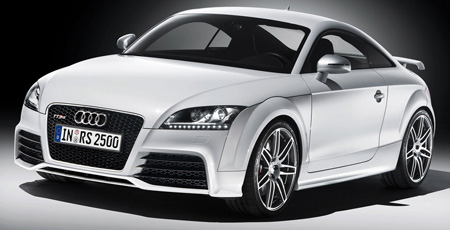
Audi TT RS, 2010

Audi TT RS, 2010


The Audi TT RS has a turbocharged 2.5-liter engine with direct gasoline injection; it produces 250 kW (340 bhp) and 450 Nm (331.90 lb.-ft.) of torque. The blazing five-cylinder engine enables the Audi TT RS to perform extraordinary feats. In conjunction with quattro permanent all-wheel drive and a high-performance chassis, the engine makes the compact Audi TT RS a top-notch sports car - available as a coupé or roadster.

Sporty five-cylinder gasoline engines have a long legacy at Audi. The most famous is arguably the turbocharged 2.1-liter engine in the Audi quattro. The first version, which was launched in 1980, offered an impressive 147 kW (200 bhp). And the Audi Sport quattro from 1984, directly inspired by motorsport, delivered a whopping 225 kW (306 bhp). For 25 years, turbochargers and quattro have been a dynamic formula for success.

Audi has resumed using this recipe. Designed from scratch, the five-cylinder engine combines a turbocharger with FSI direct gasoline injection to elevate the Audi TT RS to a high-performance sports car. The TFSI delivers 250 kW (340 bhp) from a displacement of 2,480 cc (151.34 cu in): a specific output of 100.8 kW (137.1 bhp) per liter.

The power-to-weight ratio is also outstanding. In the case of the Coupé, which weighs in at a mere 1,450 kilograms (3,196.70 pounds), the power-to-weight ratio is just 4.3 kilograms per bhp. The Audi TT RS Roadster has a weight of 1,510 kilograms (3,328.98 pounds) and a power-to-weight ratio of 4.4 kilograms per bhp - thanks to its extremely lightweight and largely aluminum body constructed as per the Audi Space Frame principle.

The Audi TT RS Coupé rockets from 0 to 100 km/h (0 to 62.14 mph) in 4.6 seconds; the Audi TT RS Roadster needs just a tenth of a second longer. The limited top speed of 250 km/h (155.34 mph) is merely the official figure for both versions; as an option, Audi can increase it to 280 km/h (173.98 mph).

Compact and Lightweight: The Five-cylinder TFSI
The ultra-powerful five-cylinder engine is extremely fuel-efficient, requiring an average of just 9.2 liters/100 km [25.57 mpg] as regards the Coupé (Roadster: 9.5 l/100 km [24.76 mpg]). Switchable flaps in the intake manifold mix the incoming air in a calculated configuration. Injected at a pressure as high as 120 bar by the common-rail system, the gasoline swirls intensely in the combustion chamber - which in turn cools the walls. This subsequently facilitates a compression ratio of 10.0:1, which is very high for a turbocharged engine. Both of the adjustable camshafts, controlled via chains, also enhance charging efficiency with respect to the air-fuel mixture.

The large turbocharger generates up to 1.2 bar of boost pressure. The intercooler, fed air ideally by the lower segment of the single frame radiator grille, reduces the temperature of compressed air by over 80 percent at full load.

When an Audi TT RS driver pushes the standard Sport button on the center tunnel, a flap installed in the left exhaust tailpipe renders the exhaust noise even more robust and intense while boosting engine responsiveness. An optional Sport exhaust system is available with matt black tailpipe trims and sound flap.

For Purists: The Driveline
The Audi TT RS is the first classic sports car in the Audi RS family. Like the Audi RS4 and the Audi RS6, the Audi TT RS was developed by quattro GmbH as a pure, no-holds-barred driving machine. A new six-speed manual transmission conveys the engine's tremendous power, and permits easy and precise operation thanks to a specially designed shift lever boasting particularly short shift travel. The transmission's defining characteristics are a high efficiency ratio and a sportily narrow spread of the gear ratios.

The Audi TT RS features quattro permanent all-wheel drive as standard equipment. Its heart lies at the rear axle: an electronically controlled, hydraulic multi-plate clutch. If a situation calls for it, the clutch redirects a majority of the torque input from the front wheels to the rear wheels.

High-tech Excellence from Audi: Chassis and Body
The chassis of the Audi TT RS builds on the cutting-edge foundation of the base Audi TT design. The four-link rear suspension, which handles longitudinal and lateral forces separately, plays a crucial role. The electromechanical steering is highly efficient and the power steering adjusts to the vehicle's speed. With aluminum in the front and sheet steel in the back, the body's innovative mixture of materials results in a well-balanced axle-load distribution, excellent crash safety, and the outstanding rigidity which lays the cornerstone for the car's precise handling.

The Face of Power: The Exterior
At just 4.20 meters (13.78 feet) in length, the vigorously compact Audi TT RS hints at its explosive potential from the very first glimpse. The front spoiler tapers downward into a splitter, reminiscent of a racing car. The large and squared air inlets have diamond-shaped inserts. And the high-gloss black single frame grille with a frame in matt aluminum look and the TT RS badge bear the same styling. The xenon plus headlights with LED daytime running lights notify faraway drivers that an Audi TT RS is approaching.

The Interior and Equipment Packages
The dynamic exterior of the Audi TT RS is matched by the interior. The leather multifunction sports steering wheel has an especially thick rim, is flat-bottomed, and is covered with perforated leather. Integrated in the instrument panel, the driver information system can display boost pressure and oil temperature as well as a lap timer for chronicling feats at the racetrack. The door handles consist of two slim strips - typical of Audi RS models. An automatic climate-control system and the concert sound system are standard, as are an electrohydraulic soft top and an electric wind deflector for the Audi TT RS Roadster.

Audi TT RS, 2010

Audi TT RS, 2010


The Audi TT RS has a turbocharged 2.5-liter engine with direct gasoline injection; it produces 250 kW (340 bhp) and 450 Nm (331.90 lb.-ft.) of torque. The blazing five-cylinder engine enables the Audi TT RS to perform extraordinary feats. In conjunction with quattro permanent all-wheel drive and a high-performance chassis, the engine makes the compact Audi TT RS a top-notch sports car - available as a coupé or roadster.

Sporty five-cylinder gasoline engines have a long legacy at Audi. The most famous is arguably the turbocharged 2.1-liter engine in the Audi quattro. The first version, which was launched in 1980, offered an impressive 147 kW (200 bhp). And the Audi Sport quattro from 1984, directly inspired by motorsport, delivered a whopping 225 kW (306 bhp). For 25 years, turbochargers and quattro have been a dynamic formula for success.

Audi has resumed using this recipe. Designed from scratch, the five-cylinder engine combines a turbocharger with FSI direct gasoline injection to elevate the Audi TT RS to a high-performance sports car. The TFSI delivers 250 kW (340 bhp) from a displacement of 2,480 cc (151.34 cu in): a specific output of 100.8 kW (137.1 bhp) per liter.

The power-to-weight ratio is also outstanding. In the case of the Coupé, which weighs in at a mere 1,450 kilograms (3,196.70 pounds), the power-to-weight ratio is just 4.3 kilograms per bhp. The Audi TT RS Roadster has a weight of 1,510 kilograms (3,328.98 pounds) and a power-to-weight ratio of 4.4 kilograms per bhp - thanks to its extremely lightweight and largely aluminum body constructed as per the Audi Space Frame principle.

The Audi TT RS Coupé rockets from 0 to 100 km/h (0 to 62.14 mph) in 4.6 seconds; the Audi TT RS Roadster needs just a tenth of a second longer. The limited top speed of 250 km/h (155.34 mph) is merely the official figure for both versions; as an option, Audi can increase it to 280 km/h (173.98 mph).

Compact and Lightweight: The Five-cylinder TFSI
The ultra-powerful five-cylinder engine is extremely fuel-efficient, requiring an average of just 9.2 liters/100 km [25.57 mpg] as regards the Coupé (Roadster: 9.5 l/100 km [24.76 mpg]). Switchable flaps in the intake manifold mix the incoming air in a calculated configuration. Injected at a pressure as high as 120 bar by the common-rail system, the gasoline swirls intensely in the combustion chamber - which in turn cools the walls. This subsequently facilitates a compression ratio of 10.0:1, which is very high for a turbocharged engine. Both of the adjustable camshafts, controlled via chains, also enhance charging efficiency with respect to the air-fuel mixture.

The large turbocharger generates up to 1.2 bar of boost pressure. The intercooler, fed air ideally by the lower segment of the single frame radiator grille, reduces the temperature of compressed air by over 80 percent at full load.

When an Audi TT RS driver pushes the standard Sport button on the center tunnel, a flap installed in the left exhaust tailpipe renders the exhaust noise even more robust and intense while boosting engine responsiveness. An optional Sport exhaust system is available with matt black tailpipe trims and sound flap.

For Purists: The Driveline
The Audi TT RS is the first classic sports car in the Audi RS family. Like the Audi RS4 and the Audi RS6, the Audi TT RS was developed by quattro GmbH as a pure, no-holds-barred driving machine. A new six-speed manual transmission conveys the engine's tremendous power, and permits easy and precise operation thanks to a specially designed shift lever boasting particularly short shift travel. The transmission's defining characteristics are a high efficiency ratio and a sportily narrow spread of the gear ratios.

The Audi TT RS features quattro permanent all-wheel drive as standard equipment. Its heart lies at the rear axle: an electronically controlled, hydraulic multi-plate clutch. If a situation calls for it, the clutch redirects a majority of the torque input from the front wheels to the rear wheels.

High-tech Excellence from Audi: Chassis and Body
The chassis of the Audi TT RS builds on the cutting-edge foundation of the base Audi TT design. The four-link rear suspension, which handles longitudinal and lateral forces separately, plays a crucial role. The electromechanical steering is highly efficient and the power steering adjusts to the vehicle's speed. With aluminum in the front and sheet steel in the back, the body's innovative mixture of materials results in a well-balanced axle-load distribution, excellent crash safety, and the outstanding rigidity which lays the cornerstone for the car's precise handling.

The Face of Power: The Exterior
At just 4.20 meters (13.78 feet) in length, the vigorously compact Audi TT RS hints at its explosive potential from the very first glimpse. The front spoiler tapers downward into a splitter, reminiscent of a racing car. The large and squared air inlets have diamond-shaped inserts. And the high-gloss black single frame grille with a frame in matt aluminum look and the TT RS badge bear the same styling. The xenon plus headlights with LED daytime running lights notify faraway drivers that an Audi TT RS is approaching.

The Interior and Equipment Packages
The dynamic exterior of the Audi TT RS is matched by the interior. The leather multifunction sports steering wheel has an especially thick rim, is flat-bottomed, and is covered with perforated leather. Integrated in the instrument panel, the driver information system can display boost pressure and oil temperature as well as a lap timer for chronicling feats at the racetrack. The door handles consist of two slim strips - typical of Audi RS models. An automatic climate-control system and the concert sound system are standard, as are an electrohydraulic soft top and an electric wind deflector for the Audi TT RS Roadster.

Audi S5 Cabriolet, 2010

Audi S5 Cabriolet, 2010


The engine in the Audi S5 Cabriolet is a newly developed, supercharged, three-liter V6. The pressure in the 3.0 TFSI is generated by a mechanical supercharger - with impressive results: The power output tops out at 245 kW (333 hp), the torque between 2,900 and 5,300 rpm remains constant at a generous 440 Nm (324.53 lb-ft). The powerful thrust and the spontaneous, aggressive response make for a fascinating driving experience. The Audi S5 Cabriolet is catapulted in 5.6 seconds from zero to 100 km/h (62.14 mph) and accelerates up to a preset top speed of 250 km/h (155.34 mph). Yet at 9.6 liters per 100 km (24.5 US mpg), its fuel efficiency is highly impressive (preliminary values).
Standard equipment of the Audi S5 Cabriolet includes the servotronic, the seven-speed S tronic and the quattro drive system package. The sport differential is optional. A sport suspension keeps the body close to the road. The 18-inch cast aluminum wheels are equipped with 245/40 tires. The black brake calipers are emblazoned with S5 emblems. The acoustic top, xenon plus headlights, electrically adjustable sport seats with Alcantara leather upholstery, and a multifunction sport steering wheel are also standard equipment.
 
Audi A5 Cabriolet
Dynamic and wonderful to look at, the new Audi A5 Cabriolet is a real Audi, and an especially exciting one at that. The four-seater with the fabric top combines a sporty character with the fascination of open-top driving, refined comfort, and great everyday utility. Seven powerful engines, an agile suspension and a wide range of high-end options make the new Audi model the most attractive mid-range convertible. The top-of-the-line model of Audi's new family of convertibles is the Audi S5 Cabriolet. The engine of the S5 Cabriolet is the newly developed, supercharged three-liter V6 with gasoline direct injection. Prices start at EUR 37,300 for the 1.8 TFSI with 118 kW (160 hp) and six-speed manual transmission. Delivery of the first Audi A5 Cabriolet models will begin in the second quarter of 2009.
Like all open-top Audi models, the new Audi A5 Cabriolet too has a classic fabric top - which endows it with a striking silhouette of dynamic elegance. The lightweight softtop opens in 15 seconds - and closes in 17 seconds. The fully automatic open/close drive comes as standard. An acoustic top is optionally available, which reduces wind noise almost to the hardtop level.

When opened, the Audi A5 Cabriolet top folds down so effectively that very little trunk space is used up - leaving 320 liters (11.3 cu ft) of unused storage volume, clearly the best value in its field of competitors. The softtop compartment lowers itself automatically when the top is opened.
Equally useful is the fold-down rear seat backrest with the large pass-through between the luggage space and the interior, which increases the storage volume to a generous 750 liters (26.49 cu. ft.).
Automatic seat belt extenders round out the comfort in the interior. Neck-level heating is optionally available for the front seats. The optional leather seats are coated with a special layer to reduce solar heating. There is comfortable room for four persons. The refined ambiance combines with exemplary ergonomics to convey an atmosphere of sporty elegance. Ultra-high-strength steels and selective reinforcements of the body ensure maximal rigidity and crash safety.

Fascinating dynamics: Audi drive select
The perfect addition to this technology package is the Audi drive select vehicle dynamics system, which enables the driver to chose among three different engine maps controlling the characteristics of the fuel feed, the shifting points of the seven-speed S tronic and multitronic, and the mode of operation of the servotronic steering system.

Audi drive select is only available in combination with one or more of three additional technologies - the sport differential, the adaptive control for the shock absorbers, and dynamic steering. This is an additional high-tech solution: Its superposition gear varies the gear ratio as a function of the driving speed by up to 100 percent.
The new Audi A5 Cabriolet features a rich array of equipment, including 17-inch alloy wheels, automatic air conditioning, and an audio system with a CD player. One of the highlights among the optional equipment is the third-generation MMI operating system, which provides many attractive navigation and entertainment functions.
As the dynamic top-of-the-line model of the new production series, the Audi S5 Cabriolet occupies a very special position. Its three-liter TFSI - a V6 with turbocharger - unfolds its 245 kW (333 hp) and 440 Nm (324.53 lb-ft) of torque impressively: It responds tenaciously to the throttle and delivers excellent driving performance. The quattro drive, a sport suspension with 18-inch wheels and a number of special equipment details underscore the athletic power of the Audi S5 Cabriolet.

The exterior design
The Audi A5 Cabriolet combines Audi's progressive styling with the fascination of an open-top car. The long engine hood, the sharp lines, the sweep of the shoulder contour, the elegantly curved surfaces, the large wheels, the distinctive front end, and the expressive tail all interact to create a sculptural, sensuous whole. The Audi A5 Cabriolet is 4.63 meters (15.19 ft) long and 1.85 meters (6.07 ft) wide, but only 1.38 meters (4.53 ft) tall: the sportiest proportions in its class.
The styling of the front end is dominated by the single-frame grille, which is flanked by large air intakes. The exquisite design of the headlights makes them look like technical jewels. The daytime running lights of the optional xenon plus headlights consist of LEDs. An aluminum molding lends high gloss to the windshield frame.
The looks of the tail end are sharpened by horizontal lines, broad tail lights, straight tailpipes, and a distinctly colored diffuser insert. The trunk lid bears an unobtrusive spoiler lip. The xenon plus headlight option comes complete with LED taillights, which create a distinctive light pattern.

The convertible top
The fabric top with the large glass rear window fits smoothly into the design profile. This is one of several reasons why Audi preferred it to a folding steel roof. What's more, its construction is much lighter in weight, which reduces the overall weight of the Cabriolet and lowers its center of gravity. The outer skin of the top is available in a choice of four colors, the inside in three.
The softtop consists of three layers. The intermediate layer is a cushioning pad. In the optional acoustic top, which reduces wind noise almost to hardtop level, this is replaced by a foam layer up to 15 millimeters (0.59 in) in thickness. The acoustic top comes with a ceiling light for the rear seat - a solution usually only found in the topmost convertible luxury segment.
In both versions, a hydraulic pump and four operating cylinders that move the top are actuated when a pushbutton on the central console or on the optional remote access assistant is depressed. It takes 15 seconds to open the top, 17 seconds to close it. Both actions can also be actuated while driving at up to 50 km/h (31.07 mph) - which makes driving much more comfortable.

When opened, the top is retracted underneath a fixed cover, where it is folded down into an extremely compact shape. Its storage compartment, which automatically lowers itself into the trunk space, only takes up a few centimeters in height - and only 60 liters (2.12 cu ft) of the 380 liters (13.42 cu ft) of luggage space. The remaining 320 liters (11.3 cu ft) with the top open are by far the best value among comparable vehicles. What's more, the low position of the loading lip makes loading and unloading easier. The wind deflector, which is supplied as standard, can be stored in the spare-wheel well to save space.
A very convenient feature in the Audi A5 Cabriolet are the split folding rear seat backrests. They can be easily unlocked by actuating levers in the trunk and drop automatically onto the seat cushions. The standard pass-though is 70 centimeters (27.56 in) wide. The loading space behind the front seatback is 1.76 meters (69.29 in) long, providing a total storage volume of 750 liters (26.49 cu ft).

Audi TT GT4 Concept, 2010

Audi TT GT4 Concept, 2010


On the occasion of the DTM race in Shanghai, Audi presented the concept of a GT4 car based on the Audi TT. The TT, developed by the Technical Development and the Production divisions plus quattro GmbH, is intended to extend Audi's new modular customer sport program from 2012 forward.

With the production-based TT GT4, Audi wants to offer potential customers a base option for affordable motorsport. The vehicle's platform is a motorsport body with a roll-over cage, a safety-optimized fuel tank box and further modifications which will be identical for all future customer sport versions. The Audi TT is equipped with a TFSI engine delivering about 250 kW (340 hp). The front apron, rear apron and the rear wing stem from the production Audi TT RS. The hood, doors and trunk lid are made of CFRP and the windows of plastic. The TT is fitted with a S-tronic transmission with a differential lock, a modified production suspension with adjustable dampers, plus 9.5 x 18 inch light alloy wheels.

The Audi TT GT4 is planned to sell for about 120,000 euros. Audi is not only targeting Europe but also the Asian market. On the occasion of the DTM race in Shanghai the Audi TT is being launched in the Chinese market as well.

The five-time Le Mans winner Frank Biela did some demo laps in the new Audi TT on the street circuit in Shanghai. Other cars that could be seen in action in Shanghai as well were the SP4T version of the TT RS and the Audi R8 LMS.

Audi S5 Cabriolet, 2010

Audi S5 Cabriolet, 2010


The engine in the Audi S5 Cabriolet is a newly developed, supercharged, three-liter V6. The pressure in the 3.0 TFSI is generated by a mechanical supercharger - with impressive results: The power output tops out at 245 kW (333 hp), the torque between 2,900 and 5,300 rpm remains constant at a generous 440 Nm (324.53 lb-ft). The powerful thrust and the spontaneous, aggressive response make for a fascinating driving experience. The Audi S5 Cabriolet is catapulted in 5.6 seconds from zero to 100 km/h (62.14 mph) and accelerates up to a preset top speed of 250 km/h (155.34 mph). Yet at 9.6 liters per 100 km (24.5 US mpg), its fuel efficiency is highly impressive (preliminary values).
Standard equipment of the Audi S5 Cabriolet includes the servotronic, the seven-speed S tronic and the quattro drive system package. The sport differential is optional. A sport suspension keeps the body close to the road. The 18-inch cast aluminum wheels are equipped with 245/40 tires. The black brake calipers are emblazoned with S5 emblems. The acoustic top, xenon plus headlights, electrically adjustable sport seats with Alcantara leather upholstery, and a multifunction sport steering wheel are also standard equipment.
 
Audi A5 Cabriolet
Dynamic and wonderful to look at, the new Audi A5 Cabriolet is a real Audi, and an especially exciting one at that. The four-seater with the fabric top combines a sporty character with the fascination of open-top driving, refined comfort, and great everyday utility. Seven powerful engines, an agile suspension and a wide range of high-end options make the new Audi model the most attractive mid-range convertible. The top-of-the-line model of Audi's new family of convertibles is the Audi S5 Cabriolet. The engine of the S5 Cabriolet is the newly developed, supercharged three-liter V6 with gasoline direct injection. Prices start at EUR 37,300 for the 1.8 TFSI with 118 kW (160 hp) and six-speed manual transmission. Delivery of the first Audi A5 Cabriolet models will begin in the second quarter of 2009.
Like all open-top Audi models, the new Audi A5 Cabriolet too has a classic fabric top - which endows it with a striking silhouette of dynamic elegance. The lightweight softtop opens in 15 seconds - and closes in 17 seconds. The fully automatic open/close drive comes as standard. An acoustic top is optionally available, which reduces wind noise almost to the hardtop level.

When opened, the Audi A5 Cabriolet top folds down so effectively that very little trunk space is used up - leaving 320 liters (11.3 cu ft) of unused storage volume, clearly the best value in its field of competitors. The softtop compartment lowers itself automatically when the top is opened.
Equally useful is the fold-down rear seat backrest with the large pass-through between the luggage space and the interior, which increases the storage volume to a generous 750 liters (26.49 cu. ft.).
Automatic seat belt extenders round out the comfort in the interior. Neck-level heating is optionally available for the front seats. The optional leather seats are coated with a special layer to reduce solar heating. There is comfortable room for four persons. The refined ambiance combines with exemplary ergonomics to convey an atmosphere of sporty elegance. Ultra-high-strength steels and selective reinforcements of the body ensure maximal rigidity and crash safety.

Fascinating dynamics: Audi drive select
The perfect addition to this technology package is the Audi drive select vehicle dynamics system, which enables the driver to chose among three different engine maps controlling the characteristics of the fuel feed, the shifting points of the seven-speed S tronic and multitronic, and the mode of operation of the servotronic steering system.

Audi drive select is only available in combination with one or more of three additional technologies - the sport differential, the adaptive control for the shock absorbers, and dynamic steering. This is an additional high-tech solution: Its superposition gear varies the gear ratio as a function of the driving speed by up to 100 percent.
The new Audi A5 Cabriolet features a rich array of equipment, including 17-inch alloy wheels, automatic air conditioning, and an audio system with a CD player. One of the highlights among the optional equipment is the third-generation MMI operating system, which provides many attractive navigation and entertainment functions.
As the dynamic top-of-the-line model of the new production series, the Audi S5 Cabriolet occupies a very special position. Its three-liter TFSI - a V6 with turbocharger - unfolds its 245 kW (333 hp) and 440 Nm (324.53 lb-ft) of torque impressively: It responds tenaciously to the throttle and delivers excellent driving performance. The quattro drive, a sport suspension with 18-inch wheels and a number of special equipment details underscore the athletic power of the Audi S5 Cabriolet.

The exterior design
The Audi A5 Cabriolet combines Audi's progressive styling with the fascination of an open-top car. The long engine hood, the sharp lines, the sweep of the shoulder contour, the elegantly curved surfaces, the large wheels, the distinctive front end, and the expressive tail all interact to create a sculptural, sensuous whole. The Audi A5 Cabriolet is 4.63 meters (15.19 ft) long and 1.85 meters (6.07 ft) wide, but only 1.38 meters (4.53 ft) tall: the sportiest proportions in its class.
The styling of the front end is dominated by the single-frame grille, which is flanked by large air intakes. The exquisite design of the headlights makes them look like technical jewels. The daytime running lights of the optional xenon plus headlights consist of LEDs. An aluminum molding lends high gloss to the windshield frame.
The looks of the tail end are sharpened by horizontal lines, broad tail lights, straight tailpipes, and a distinctly colored diffuser insert. The trunk lid bears an unobtrusive spoiler lip. The xenon plus headlight option comes complete with LED taillights, which create a distinctive light pattern.

The convertible top
The fabric top with the large glass rear window fits smoothly into the design profile. This is one of several reasons why Audi preferred it to a folding steel roof. What's more, its construction is much lighter in weight, which reduces the overall weight of the Cabriolet and lowers its center of gravity. The outer skin of the top is available in a choice of four colors, the inside in three.
The softtop consists of three layers. The intermediate layer is a cushioning pad. In the optional acoustic top, which reduces wind noise almost to hardtop level, this is replaced by a foam layer up to 15 millimeters (0.59 in) in thickness. The acoustic top comes with a ceiling light for the rear seat - a solution usually only found in the topmost convertible luxury segment.
In both versions, a hydraulic pump and four operating cylinders that move the top are actuated when a pushbutton on the central console or on the optional remote access assistant is depressed. It takes 15 seconds to open the top, 17 seconds to close it. Both actions can also be actuated while driving at up to 50 km/h (31.07 mph) - which makes driving much more comfortable.

When opened, the top is retracted underneath a fixed cover, where it is folded down into an extremely compact shape. Its storage compartment, which automatically lowers itself into the trunk space, only takes up a few centimeters in height - and only 60 liters (2.12 cu ft) of the 380 liters (13.42 cu ft) of luggage space. The remaining 320 liters (11.3 cu ft) with the top open are by far the best value among comparable vehicles. What's more, the low position of the loading lip makes loading and unloading easier. The wind deflector, which is supplied as standard, can be stored in the spare-wheel well to save space.
A very convenient feature in the Audi A5 Cabriolet are the split folding rear seat backrests. They can be easily unlocked by actuating levers in the trunk and drop automatically onto the seat cushions. The standard pass-though is 70 centimeters (27.56 in) wide. The loading space behind the front seatback is 1.76 meters (69.29 in) long, providing a total storage volume of 750 liters (26.49 cu ft).
Twitter Delicious Facebook Digg Stumbleupon Favorites More