Showing posts with label Volkswagen. Show all posts

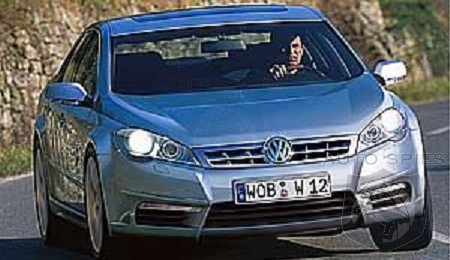
Volkswagen Tiguan 2012


Volkswagen's baby-off roader is deed a new new approach! Judging by these shots, the German faithful will be hoping to channel the Tiguan into connector with the reside of the VW grasp with a army of styling updates and revisions.

Hiding underneath the dull textile testament be the fashionable Volkswagen tribe tackling, including a cleaner frame and more cuspated headlights.

Meanwhile, at the back the revisions faculty be harder to marker with exclusive a lean re-design due for the tail-lights.

Engines instrument mostly mimic the latest roster and should countenance the turbo- and supercharged 1.4-litre TSI engine, as good as 1.6 and 2.0 TDI variants. All engines can be matched to a traditional six-speed recitation gearbox or, as an option, to Volkswagen's semi-automatic DSG shell.

Look to see the lift revealed at the Paris Locomote Feigning in October this year, with new models effort on marketing archean incoming gathering.

Volkswagen Golf TDI Hybrid Concept Car


Volkswagen has made announcement that the concept of prime Volkswagen Golf TDI Hybrid will be unveiled at the Geneva Motor Show.
Powered by diesel engine, electric motor and 7-speed DSG gearbox, Volkswagen Golf TDI Hybrid concept requires only 3.4 liters of fuel for 100 km.
concept car Volkswagen Golf TDI Hybrid is also designed to run only with the bias electric power alone.


With its Golf TDI Hybrid, Volkswagen shows the kind of potential inherent in the combination of high-tech diesel engine, electric motor and 7-speed DSG technology. Exhibited for the first time at the Geneva Motor Show, concept car consumes no more than 3.4 liters of diesel per 100 kilometers. It is full-hybrid Golf TDI Hybrid stronger can be operated either in internal-combustion mode only or in combination mode powerful motors and power-efficient TDI. This car is also designed to run on emissions-free electric power only. Power transmission to the front axle is managed by 7-speed DSG technology. In city traffic, the vehicle will automatically stop-start system even automatically switch off diesel operations.

Volkswagen engineers to be challenged to create a decent family vehicles and highly-efficient way to emit less than 90 g / km CO2 by creating the Golf TDI Hybrid concept, a car that combines sophisticated 1.2-liter 75 PS diesel engine with an electric motor and the most recent generation of seven-speed DSG gearbox. It is capable of achieving 83 mpg on the combined cycle and emits only CO2 of 89 g / km while the vehicle around the city switched to a pure emission-free electricity for the vehicle.

Volkswagen Polo

http://www.allaguida.it/img/volkswagen-polo-r.jpgA Volkswagen Polo is no longer produced. To formalize the news that Volkswagen was the same also explained the reasons for the conclusion of the project related to the Volkswagen Polo R. The new Polo R was placed between a car and the Volkswagen Polo GTI Volkswagen Golf GTI, in what was considered a confined space for the costs, since costs Polo GTI and Golf GTI costs € 21,225 € 27,725.

A difference of € 6500 which made it difficult even to assign an estimated price of Volkswagen Polo R and for which it was not worth taking this step. In addition to these figures, however, there is also to take into account the fact that a Volkswagen Polo in R version would most likely also limited the catchment area of the Volkswagen Polo GTI, as well as that of Volkswagen Golf GTI. The most powerful Polo GTI will be the setting, equipped with the 1.4-liter TSI four-cylinder, turbocharged, direct injection of 179 horses.Volkswagen Polo

The engine under the hood of this compact reworked by the R of the German carmaker would be a 1.6 turbo 210cv. Traction instead had to be earlier because using the PQ25 platform which is based on the Polo would not have allowed the installation of four-wheel drive. Now this drive will be used to CrossPolo Volkswagen and Audi S1: powerful utility that will most likely be equipped with 270 HP, produced by the 1.4-liter TFSI or 2.0-liter TFSI engine.

Volkswagen Tiguan facelift at the Geneva Motor Show 2011

Volkswagen Tiguan facelift at the Geneva Motor Show 2011
Volkswagen has released official images of the new Tiguan facelift to be presented at the upcoming Geneva Motor Show 2011 will take place March 3 to 13. The SUV has been sold around the world in 572,000 copies, and will continue to be offered in two different body variants, the Track & Style and Sport & Style. Among the main novelties of the model there are certainly those technologies, the system recognizes the driver fatigue, Light Assist, Dynamic Light Assist and Lane Assist. On the other hand, the debut XDS electronic limited-slip differential.

Volkswagen Tiguan In addition, the SUV comes with a modified grille with chrome strips that reach the lights they have now a new form. Tiguan also undergoes some modifications to the bumper, even if you have not made any changes to the side. The front bumper is more excavated. The restyled Tiguan goes on sale in Europe in August, although in Germany can already be ordered with a price starting from € 24,175, which would be the 122 hp 1.4 TSI Trend & Fun in progress.

The range of engines, the four-cylinder turbocharged direct-injection, declined in seven units, three that are completely new. After so many rumors circulated in the weeks before I finally came new expectations and official information. What remains now is to wait for the start of next month and the start of the 2011 Geneva Motor Show to see live the Volkswagen Tiguan renewed.

2011 Volkswagen Eos Coupe-cabriolet has a new Led lights

2011 Volkswagen Eos Coupe-cabriolet  has a new Led lights

Volkswagen is distributed official information on the updated coupe-cabriolet Eos, which will be presented to the public in November at the Motor Show in Los Angeles. Car sales in the European market will begin in January next year.


2011 Volkswagen Eos Coupe-cabriolet  has a new Led lights
Volkswagen, the Eos coupe-cabriolet technically revised, enriched with new features and updated design. The look of the Eos now follows the current design language of the manufacturer. At first glance, the new headlights and grille on the modified eye: here the Eos looks very similar to the Golf VI. From the rear of the Eos at the redesigned, two-piece LED taillights and the newly designed bumper is visible to the diffuser.

Volkswagen Sports Cars XL1 (SEV) 2011 Roadster Diesel-Electric Hybrid Concept

Volkswagen Sports Cars XL1 (SEV) 2011 Roadster Diesel-Electric Hybrid ConceptThe latest Volkswagen will unveil the 3rd and latest iteration by its roadster diesel-electric hybrid concept serial, the fresh XL1 Super effective Vehicle (SEV) at these week’s Qatar Motor demo, which runs by January 26 to 29. The latest 2011 Volkswagen XL1 Hybrid Concept are motivated by a diminished 800 cc TDI two-cylinder basic rail diesel engine breaking 48 HP.

Vision becomes reality – Volkswagen’s “Formula XL1”: Volkswagen XL1 prototype consumes just 0.9 l/100 km! Wolfsburg / Doha, 25 January 2011 - Future mobility is one of the most stimulating topics of our time. The key question here: Just how much could the energy consumption of cars be reduced if all the stops were pulled out for efficiency? There is now an answer to this question, and Volkswagen is delivering it in the form of the new XL1. Combined fuel consumption: 0.9 l/100 km. No other hybrid car powered by an electric motor / internal combustion engine combination is more fuel efficient.

Volkswagen will build small run of XL1 plug-in hybrid in two years. “We want to go into series production with this car starting in 2013,” Volkswagen chairman Ferdinand Piech told Automotive News Europe on Tuesday at an event in Doha, Qatar, ahead of the 2011 Qatar auto show where Volkswagen unveiled an XL1 prototype. Pioneering construction techniques, an advanced plug-in hybrid drivetrain and innovative packaging all play a part in allowing the new Volkswagen XL1 Super Efficient Vehicle (SEV) to return 260 mpg on the combined cycle to set a Volkswagen Sports Cars XL1 (SEV) 2011 Roadster Diesel-Electric Hybrid Conceptnew benchmark for vehicle efficiency.

The most efficient car in the world. The new 2011 Volkswagen Sports Cars XL1 (SEV) Roadster Diesel-Electric Hybrid Concept shows the way forward for extreme economy vehicles and clean technologies. It also demonstrates that such cars can also be fun. The feeling when driving the XL1 is truly dynamic - not based on pure power, rather on its pure efficiency. Two examples: 1) To travel at a constant speed of 100 km/h, the prototype only needs 6.2 kW/8.4 PS – a fraction of the performance of today’s cars (Golf 1.6 TDI with 77 kW and 7-speed DSG: 13.2 kW/17.9 PS). 2) In electric mode, the XL1 needs less than 0.1 kWh (82 Wh/km) to complete a one kilometre driving course. These are record values.

Powering the 2011 Volkswagen Sports Cars XL1 (SEV) Roadster Diesel-Electric Hybrid Concept is a compact 800 cc TDI two-cylinder common rail diesel engine developing 47 hp. It's linked to an electric motor producing 27 hp, resulting in a total of 74 hp - a modest output yet more than enough when the low kerb weight of 1753 lbs (795 kg) of the vehicle is taken into account. Two-cylinder TDI uses mass production technology: The 0.8 litre TDI (35 kW/48 PS) was derived from the 1.6 litre TDI, which drives such cars as the Golf and Passat. The 0.8 TDI exhibits the same data as the 1.6-litre TDI common rail engine in terms of cylinder spacing (88 mm), cylinder bore (79.5 mm) and stroke (80.5 mm).

In addition, the Volkswagen XL1 Concept's two-cylinder and the mass produced four cylinder share key internal engine features for reducing emissions. They include special piston recesses for multiple injection and individual orientation of the individual injection jets. The excellent, smooth running properties of the common rail engines were transferred to the two cylinder engine. within addition, a balancer shaft that is driven by the crankshaft turning at the same speed optimises smooth engine running.
https://blogger.googleusercontent.com/img/b/R29vZ2xl/AVvXsEg6Rp5pRFmaFT8CPOZspv9BbLAx7rNCf3R3KmgOxVaB4FKEhr1s932O2_0zNMNIRqDJrbUtrjj07_yQWadGMhBxZKvIU9BK0nukqRz135aQylEOq8TL6DER1ajl8_gU5yJzOGIpWqEp6MQ/s400/2011-Volkswagen-Sports-Cars-XL1-%2528SEV%2529-Roadster-Diesel-Electric-Hybrid-Concept-3.jpg
When the full power of the hybrid system is engaged, the Volkswagen prototype accelerates from 0 to 100 km/h in just 11.9 seconds; its top speed is 160 km/h (electronically limited). Yet these numbers alone do not tell the whole story: Since the XL1 weighs just 795 kg, the drive system has an easy job of propelling the car. When full power is needed, the electric motor, which can deliver 100 Newton metres of torque from a standstill, works as a booster to support the TDI engine (120 Newton metres torque). Together, the TDI and E-motor deliver a maximum torque of 140 Newton metres in boosting mode.

2010 Volkswagen

2010 Volkswagen
2010 Volkswagen
2010 Volkswagen Phaeton
2010 Volkswagen Golf GTI
2010 Volkswagen
2010 Volkswagen Golf

Volkswagen Golf 2010

20 Maret 2010


Volkswagen Golf 2010
Volkswagen Golf 2010 Cars
Volkswagen Golf 2010
Volkswagen Golf 2010 Wallpapers

Volkswagen Scirocco Studie R Concept, 2008

Volkswagen Scirocco Studie R Concept, 2008


It was a triumphant drive: in May 2008, three VW Scirocco GT24 cars lined up at the start of the 24-hour endurance race on the Nürburgring track. At the wheel: driving legends the likes of Hans-Joachim Stuck and Carlos Sainz. The teams drove two 238 kW / 325 PS strong race cars to a dual victory at the finish line, first and second in their class. Now Volkswagen is presenting a street version of the race car at the 2008 Bologna Motor Show: the Volkswagen Scirocco Studie R Concept. A genuine Grand Tourismo with a 198 kW / 270 PS engine that delivers aggressive propulsive power. This power is distributed by a 6-speed dual clutch transmission. Adapted directly from car racing are the coilovers, the four-piston brake calipers and a sound-optimized exhaust system with its oval, polished tailpipes.


The concept emulates the race car version. Take the front end, for example: here the design adheres to the motto "Form follows function"; it features three large air inlet openings that guarantee optimal cooling of the brakes and engine. The front splitter that was added minimizes aerodynamic lift of the front axle. Also adopted from the racing version is the engine hood with its auxiliary air vents.

The radiator screen, diffuser and underside of the rear spoiler are treated in high-gloss black, and this provides a strong contrast to the white exterior paint. Supplemented by a "Bologna 08" badge, red and green stylistic elements on a white background create an Italian tricolor. The outside mirrors are also coordinated with this color scheme.

The Interior
Italy's national colors are also represented in the interior. White and black create the basic theme, similar to the exterior color of the Volkswagen Scirocco Studie R. The seams of the Recaro racing shell seats, steering wheel, front armrest, gearshift lever trim and floor mat edging are designed in the colors of the tricolor. Inside, nappa leather in "Deep black" and "Berry white" is applied to the uncompromisingly designed racing shell seat. The shell seats are upholstered with a deep black leather in carbon look. An eye-catching feature here is the conspicuous yet refined contrast of low and high-gloss elements of the carbon structure. Interior accents also consist of genuine carbon composites. The footwell features aluminum pedals specially designed for this vehicle.


Volkswagen Up Concept, 2007

Volkswagen Up Concept, 2007


There are cars that endure for all times. They are icons of their type, masterpieces of craftsmanship and technology; they put ideas into motion, make progress tangible and sometimes quite simply make everyday life better, more practical and enjoyable. Many of these cars carry the VW logo. "Bug, Beetle, New Beetle", "T1, Bulli, Samba bus, California", "Golf, GTI". Now Volkswagen is presenting - as a world premiere at the International Motor Show (IAA) in Frankfurt - a concept car that once again has the right stuff needed to move more than just one generation. It is a small, pure and high-spirited Volkswagen that pays tribute to its environment. The overall concept is marked by an innovative, clear, intuitive functionality.
Concept

The up! is a city specialist, a car for four persons and all languages, for the job, the university, the drive to the beach and the excursion outside the city gates. A small car that shows a lot of size, because it offers more space than any other car of similar length (3.45 meters) and width (1.63 meters). Its engine - conceivable here are all facets of technology that can be sensibly applied - will run in the rear. And that changes everything: Space, mood and design.Walter de Silva, Chief Designer of the Volkswagen group, sums it up like this: "The up! is not a car whose form will become obsolete within a very brief period of time. It shines in its cleverness and yet is made with loving care. And so the up! is a clear and strong statement for future Volkswagen design." Furthermore, the team of designers and engineers has envisioned the up! concept car as the first member of an entire model line; other facets are entirely conceivable.

Exterior design
The fact that the engine of the up! runs in the rear has a decisive inf luence on its exterior design. That is because the up! has no classic radiator grille. It forges links to the Beetle. This fact alone gives it a great deal of independence. Dominant design characteristics are the headlamps that take an inward and diagonal line, between them the horizontally arranged air vents, the VW logo (as one of the few details kept in chrome), the tailgate that extends far forward and the smooth bumper with a circumferential black stripe as a detail of the "happy face" that is typical of Volkswagen.

In many areas, technology and design have melded into a vehicle architecture that is not only appealing, but is also very utilitarian. The rear end of the up! is a good example of this. The tailgate was produced using a transparent material. Under this gate developers also integrated the high layout of the taillights. Another feature that is technically and visually new is the location of the VW logo in the tailgate; it is also located behind glass and illuminates when the light is on. The rear bumper was designed to match the "happy face" in front.
The powerful appearance of the up!, despite all of its compactness, is emphasized by a very wide track width (1.42 meters) relative to vehicle width. The wheels are flush with the sporty outboard wheel arches and side skirts. The radial design of the wheels and surfaces extending right up to the edge of the rim make the 18-inch wheels appear significantly larger than they actually are.

The wheels that are arranged far outboard in the bumper areas reduce body overhangs to a minimum. All of these features are part of an unmistakable side profile with a very long roof arch as well as clear and large surfaces. Giving shape to its style here are the large doors and the lateral window surfaces, which incline sharply upward at the height of the rear wheel arch and thereby help to form the very independent C-pillar design.

Interior design
Mounting the engine in the rear opened up entirely new interior concepts. Relative to its exterior size, the space offering is exceptionally forward-thinking. The same is true of its variability: Except for the driver's seat, all other seats can be folded and removed. Since they are designed as light shells, they can be quickly stowed in one of the cargo areas - besides the front trunk there is also one in the rear - to free up space. Afterwards, the entire passenger compartment length can be utilized as a storage area for especially bulky objects.

To achieve the high level of seating comfort that is usual at Volkswagen, besides their ergonomic design, in the case of the up! this level of comfort is also attained by a simple yet very effective trick: Similar to a self-inf lating air mattress, air can be sucked out of the seat surfaces via a valve. This means that the seats can be adjusted 1:1 to the body anatomies of the occupants who have just
taken a seat.
Intuitive controls
On its up! concept car, Volkswagen is presenting some completely new solutions when it comes to operator controls. Klaus Bischoff, Chief Designer for the Volkswagen Brand, comments on this: "Another reason the up! is so fascinating is because everything, every detail, was thought out anew. In the interior we have a touchscreen with new proximity sensor technology for controlling the navigation, radio, trip computer and climate control systems. It is operated absolutely intuitively. As a result, the most complicated functions can be controlled like child's play."

In the cockpit, a 8-inch monitor shows the driver key information such as vehicle speed, fuel level and range, as well as momentary CO2 emissions.

In the center of the instruments - equally easy for driver and front passenger to see and control - an 7-inch monitor shows the way that future human-machine interfaces will look and operate. Here all conceivable functions can be controlled via the mentioned touchscreen, which also reacts via proximity sensor to gestures, i.e. specific hand movements.

The developers intentionally separated "display" and "control" levels from one another. Always shown on the screen is a control bar with standard functions such as climate control or audio volume control. Developers packaged functions of other higher-order systems - navigation, telephone, radio, images, movies, etc. - on a display level that has been referred to internally as the "main menu carousel" - a type of virtual carousel. It consists of the icons of different system functions (telephone, navigation, etc.).
When the user touches the "main menu carousel" it can be rotated by touchscreen. Visually, this control is just as spectacular as it is intuitive. When the desired function appears on the main menu carousel - such as the telephone - all the user needs to do is move his or her hand to the display to switch over to the telephone menu, thanks to proximity sensor technology. The new type of user control is fun, easy to understand in any cultural environment and very safe. That is precisely what is typical of Volkswagen.

Twitter Delicious Facebook Digg Stumbleupon Favorites More