Showing posts with label Porsche. Show all posts

Porsche 911 GT3 R Hybrid, 2011

Porsche 911 GT3 R Hybrid, 2011


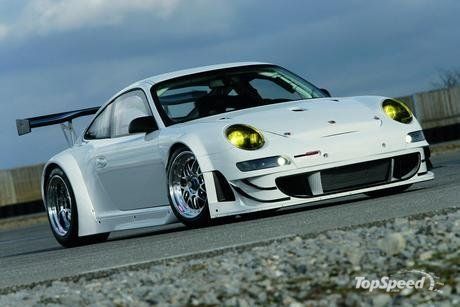
Debut in Switzerland, the Porsche 911 GT3 R Hybrid will be tested in long-distance races around the Nürburgring, Germany. The highlight of this test programme will be the 24 Hours race around the 14-mile Nürburgring Nordschleife circuit on 15/16 May 2010. However, the focus is not on the Porsche 911 GT3 R Hybrid winning the race but rather serving as a spearhead for the technology and a 'racing laboratory' that will provide invaluable knowledge and insight on the subsequent use of hybrid technology in road-going Porsche sports cars.

110 years since Ferdinand Porsche - the company's founder - developed the world's first car with hybrid drive, the Lohner Porsche Semper Vivus, it is entirely appropriate that Porsche is once again employing this visionary drive concept in a production car-based GT racing programme.

The hybrid technology featured in the Porsche 911 GT3 R Hybrid has been developed especially for racing, and is set apart from conventional hybrid systems in its configuration and choice of components. Uniquely, an electrical front axle drive with two electric motors each developing 60 kW supplements the familiar 480 hp (353 kW) four-litre flat-six 'boxer' petrol engine at the rear of the Porsche 911 GT3 R Hybrid. Consequently, the Porsche 911 GT3 R Hybrid has four driven wheels, offering even greater traction and agility.
Porsche 911 GT3 R Hybrid

A further significant point is that instead of the usual batteries of a conventional hybrid-powered road car, this 911 features an electric flywheel power generator - mounted inside the cockpit beside the driver - that delivers energy to the electric motors on the front axle.

The flywheel generator itself is an electric motor - with its rotor capable of spinning at speeds of up to 40,000 rpm - and stores energy mechanically as rotation, or kinetic, energy. The flywheel generator is charged-up whenever the driver applies the brakes, with the two electric motors reversing their function on the front axle and acting themselves as generators.

The driver is able to call upon this extra energy from the charged flywheel generator at his command for competitive advantage, such as when accelerating out of a bend or overtaking. The flywheel generator is slowed down electromagnetically in the generator mode and able to supply up to 120 kW to the two electric motors at the front axle from its resource of kinetic energy. This additional power is available to the driver after each charge process for approximately 6 - 8 seconds.

Energy formerly converted into heat, and thus wasted, upon every application of the brakes is now converted highly efficiently into additional drive power.

Depending on racing conditions, hybrid drive is used in this case not only for extra power, but also to save fuel. This again increases the efficiency and, accordingly, the performance of the Porsche 911 GT3 R Hybrid, by reducing the weight of the fuel tank or making pit stops less frequent, for example.

Porsche Intelligent Performance

The Porsche 911 GT3 R Hybrid is a perfect example of the Porsche Intelligent Performance philosophy, a principle to be found in every Porsche and defined as more power on less fuel, more efficiency and lower CO2 emissions - on the race track and on the road. Already, customers can buy a Porsche 911 coupe with a six-cylinder 345 bhp engine which can return nearly 30mpg Combined and produces just 225 g/km CO2; a feat unrivalled in its performance class and just one example of the application of Porsche Intelligent Performance to maintain outstanding driving dynamics yet lower running costs and environmental impact.

Devising smart, individual engineering solutions to combine performance and efficiency with everyday usability is something for which Porsche is renowned, and is evident in such developments as lightweight body construction methods, Porsche Ceramic Composite Brakes (PCCB) and the Porsche Doppelkupplungsgetreibe (PDK) double-clutch gearbox.

Porsche 911 GT3 R Hybrid, 2011

Porsche 911 GT3 R Hybrid, 2011


Debut in Switzerland, the Porsche 911 GT3 R Hybrid will be tested in long-distance races around the Nürburgring, Germany. The highlight of this test programme will be the 24 Hours race around the 14-mile Nürburgring Nordschleife circuit on 15/16 May 2010. However, the focus is not on the Porsche 911 GT3 R Hybrid winning the race but rather serving as a spearhead for the technology and a 'racing laboratory' that will provide invaluable knowledge and insight on the subsequent use of hybrid technology in road-going Porsche sports cars.

110 years since Ferdinand Porsche - the company's founder - developed the world's first car with hybrid drive, the Lohner Porsche Semper Vivus, it is entirely appropriate that Porsche is once again employing this visionary drive concept in a production car-based GT racing programme.

The hybrid technology featured in the Porsche 911 GT3 R Hybrid has been developed especially for racing, and is set apart from conventional hybrid systems in its configuration and choice of components. Uniquely, an electrical front axle drive with two electric motors each developing 60 kW supplements the familiar 480 hp (353 kW) four-litre flat-six 'boxer' petrol engine at the rear of the Porsche 911 GT3 R Hybrid. Consequently, the Porsche 911 GT3 R Hybrid has four driven wheels, offering even greater traction and agility.
Porsche 911 GT3 R Hybrid

A further significant point is that instead of the usual batteries of a conventional hybrid-powered road car, this 911 features an electric flywheel power generator - mounted inside the cockpit beside the driver - that delivers energy to the electric motors on the front axle.

The flywheel generator itself is an electric motor - with its rotor capable of spinning at speeds of up to 40,000 rpm - and stores energy mechanically as rotation, or kinetic, energy. The flywheel generator is charged-up whenever the driver applies the brakes, with the two electric motors reversing their function on the front axle and acting themselves as generators.

The driver is able to call upon this extra energy from the charged flywheel generator at his command for competitive advantage, such as when accelerating out of a bend or overtaking. The flywheel generator is slowed down electromagnetically in the generator mode and able to supply up to 120 kW to the two electric motors at the front axle from its resource of kinetic energy. This additional power is available to the driver after each charge process for approximately 6 - 8 seconds.

Energy formerly converted into heat, and thus wasted, upon every application of the brakes is now converted highly efficiently into additional drive power.

Depending on racing conditions, hybrid drive is used in this case not only for extra power, but also to save fuel. This again increases the efficiency and, accordingly, the performance of the Porsche 911 GT3 R Hybrid, by reducing the weight of the fuel tank or making pit stops less frequent, for example.

Porsche Intelligent Performance

The Porsche 911 GT3 R Hybrid is a perfect example of the Porsche Intelligent Performance philosophy, a principle to be found in every Porsche and defined as more power on less fuel, more efficiency and lower CO2 emissions - on the race track and on the road. Already, customers can buy a Porsche 911 coupe with a six-cylinder 345 bhp engine which can return nearly 30mpg Combined and produces just 225 g/km CO2; a feat unrivalled in its performance class and just one example of the application of Porsche Intelligent Performance to maintain outstanding driving dynamics yet lower running costs and environmental impact.

Devising smart, individual engineering solutions to combine performance and efficiency with everyday usability is something for which Porsche is renowned, and is evident in such developments as lightweight body construction methods, Porsche Ceramic Composite Brakes (PCCB) and the Porsche Doppelkupplungsgetreibe (PDK) double-clutch gearbox.

Porsche GT3 RS 4.0L Limited Edition

Porsche GT3 RS 4.0L Limited Edition
According to the well-connected sources of TeamSpeed.com members, the new GT3 RS 4.0L Limited Edition (exact name not yet known) will sport a larger displacement flat-six. Bumping engine size by 200ccs, the 4.0-liter will make as much as 500-hp – a significant jump of 50-hp over the standard car.

Little else is known about the car, but look for a more extreme setup with an even lighter curb weight. There’s even the possibility that it could use the new dual-clutch gearbox that’s rumored to find its way into the next-gen GT3.

As for the price, it’s likely to be a significant jump over the $135,000 GT3 RS model.

Gemballa Porsche Carrera GT Mirage GT White and Gold Edition

The Mirage GT White and Gold Edition is the latest work from the car tuning company Gemballa, and the car is their model based on the Porsche Carrera GT. Take the Porsche 980 Carrera GT, Gemballa modifies the exterior with an aerodynamic body kit, custom paint job gold, gold and carbon fiber accents. In the shop car tuning receive performance upgrades to boost the number to 670 hp engine, with a

SpeedART TITAN EVO Porsche Cayenne 2011

SpeedART TITAN EVO Porsche Cayenne 2011Porsche Receiver from Rutesheim Deutschland has presented at Essen Causative Evince 2010 the so called speedHYBRID 450 as TITAN-EVO-completion supported on the Chilly S Hybrid (respectively as Satellite EVO 600 supported on Flavorer Turbo). For the engine execution program of the Porsche Capsicum, speedART has provided mass execution upgrades that permit ice assign with +50 HP / 70 NM, organism upgrades with +70 HP / 50 NM, and turbo depute up to +100 HP / 150NM.


SpeedART TITAN EVO Porsche Cayenne 2011
Especially for the V6 compressor engine of Chili S Intercrossed speedART formed a index increase to 450 HP. So the speedHYBRID 450 substantially outperforms the power of program Seasoning S. The running from 0-100 rate reduces from 6,5 Sec. to 5,9 Sec. and the V-Max. increases by 10 rate to 252 km/h, so it smooth outclasses the normal V6 by over 20 km/h.

speedART has handed pair fresh body kits which can be additional to all series Cayenne 958. This so paged TITAN-EVO aerodynamic kit consists of optimized mounting branches for front- and rear skirt which produces it appearance much sportier. As another underscore and international handed for the first time, speedART devised and planned a 23″ wheel which is called CTS-FORGED. This faked and weight-optimised 1-piece screwed wheelset is available in the height 11 x 23″ with 315/25 ZR 23″ tires.

Porsche 911 Turbo Stallion, 2008

Hamann Porsche 911 Turbo Stallion, 2008


Like an Arabian Stallion collecting its attention for a jump. Concentrated and full of dynamic body tension. This is how the silhouette of the super sports car called Stallion presents itself. But the latest development of the premium refiner Hamann MOTORSPORT offers far more than a fascinating new aerodynamics concept. The efficiency boost to 630 hp and the Hamann-sport chassis turn the Stallion into one of the most powerful and fastest sports car in the whole world.
Less roof - more wings
The most striking eye-catcher of the individualised Porsche is the lowered roofline. For this elaborate reconstruction, Hamann reduces the windows and pillars up to 8 centimetres. Thereby, the reduced front surface diminishes the air resistance and therefore the fuel consumption. Moreover, this relieves the motor drastically while pushing for maximum speed. But that´s not all: Hamann equips the Stallion with gull-wing doors allowing the door to swing diagonally outward from the body of the car. This proprietary development does not only have an extravagant design, but also an exceptional stability. The combination between the Hamann front- and rear skirt with the altered heck spoiler profile and the roof spoiler produce additional road grip. Side spoilers between the axles put a finishing tough to the overall appearance.

Sensational performance based on well-engineered technology

The core of the Hamann Stallion is its modified engine. The Hamann motor technicians enhance the 3.6 litres Boxer Biturbo motor from standard 480 hp / 353 kW to 630 hp / 463 kW at 6,300 rpm. The upgrade also includes two larger VNT (variable nozzle turbochargers), a sport air strainer, a stainless steel exhaust system with metal catalytic converters and a new motor management.

These are measures which certainly hit their target. The Hamann Stallion accelerates to 100 km/h in only 3.3 seconds and is therefore six tenth of a second faster than its serial counterpart. The new maximum speed tag is sensational. With its efficiency boost and the reduced air resistance by Hamann-Aerodynamics, the Stallion achieves a maximum speed of 359 km/h.
Wheels and chassis - the combination for best roadholding and exclusive appearance
Hamann developed a sport chassis and a matching wheel-/tyre-combination for the optimal handling of the increased requirements of the Hamann Stallion. The three-part Hamann aluminium wheel named EDITION RACE with its black lacquered star and the titan bolting of the high gloss polished rim flange clearly emphasise the affinity of the Laupheim-based refiner to motor sports.

Due to its forge technology production, it is very light and therefore significantly improves the handling- and driving qualities. The wheel-tyre combination is available in 8,5Jx20 inches with tyres measuring 245/30ZR20 in front and 12,0Jx20 rims with 325/25ZR20 tyres at the back.

Perfect combination between motor sports and lifestyle
Only the most precious materials can be found in the Hamann Stallion interior. The Hamann upholsterers only use selected leather for covering the fittings and sport seats. Aluminium gear shift and aluminium pedals make the cockpit gleam in a noble look and perfectly match with the carbon parts of the interior set. Precisely applied embroideries of the Hamann logo in the floor mats and headrests set further creative accents. All of these features complement one another in a stylish symbioses of motor sports flair and lifestyle

Porsche 911 Turbo Stallion, 2008

Hamann Porsche 911 Turbo Stallion, 2008


Like an Arabian Stallion collecting its attention for a jump. Concentrated and full of dynamic body tension. This is how the silhouette of the super sports car called Stallion presents itself. But the latest development of the premium refiner Hamann MOTORSPORT offers far more than a fascinating new aerodynamics concept. The efficiency boost to 630 hp and the Hamann-sport chassis turn the Stallion into one of the most powerful and fastest sports car in the whole world.
Less roof - more wings
The most striking eye-catcher of the individualised Porsche is the lowered roofline. For this elaborate reconstruction, Hamann reduces the windows and pillars up to 8 centimetres. Thereby, the reduced front surface diminishes the air resistance and therefore the fuel consumption. Moreover, this relieves the motor drastically while pushing for maximum speed. But that´s not all: Hamann equips the Stallion with gull-wing doors allowing the door to swing diagonally outward from the body of the car. This proprietary development does not only have an extravagant design, but also an exceptional stability. The combination between the Hamann front- and rear skirt with the altered heck spoiler profile and the roof spoiler produce additional road grip. Side spoilers between the axles put a finishing tough to the overall appearance.

Sensational performance based on well-engineered technology

The core of the Hamann Stallion is its modified engine. The Hamann motor technicians enhance the 3.6 litres Boxer Biturbo motor from standard 480 hp / 353 kW to 630 hp / 463 kW at 6,300 rpm. The upgrade also includes two larger VNT (variable nozzle turbochargers), a sport air strainer, a stainless steel exhaust system with metal catalytic converters and a new motor management.

These are measures which certainly hit their target. The Hamann Stallion accelerates to 100 km/h in only 3.3 seconds and is therefore six tenth of a second faster than its serial counterpart. The new maximum speed tag is sensational. With its efficiency boost and the reduced air resistance by Hamann-Aerodynamics, the Stallion achieves a maximum speed of 359 km/h.
Wheels and chassis - the combination for best roadholding and exclusive appearance
Hamann developed a sport chassis and a matching wheel-/tyre-combination for the optimal handling of the increased requirements of the Hamann Stallion. The three-part Hamann aluminium wheel named EDITION RACE with its black lacquered star and the titan bolting of the high gloss polished rim flange clearly emphasise the affinity of the Laupheim-based refiner to motor sports.

Due to its forge technology production, it is very light and therefore significantly improves the handling- and driving qualities. The wheel-tyre combination is available in 8,5Jx20 inches with tyres measuring 245/30ZR20 in front and 12,0Jx20 rims with 325/25ZR20 tyres at the back.

Perfect combination between motor sports and lifestyle
Only the most precious materials can be found in the Hamann Stallion interior. The Hamann upholsterers only use selected leather for covering the fittings and sport seats. Aluminium gear shift and aluminium pedals make the cockpit gleam in a noble look and perfectly match with the carbon parts of the interior set. Precisely applied embroideries of the Hamann logo in the floor mats and headrests set further creative accents. All of these features complement one another in a stylish symbioses of motor sports flair and lifestyle

TechArt Porsche Boxster, 2005

TechArt Porsche Boxster, 2005


Athletic Beauty: TechArt Widebody based on the Porsche Boxster (987)

The Athletic beauty:
The TechArt Widebody based on the Porsche Boxster of the 987 model range doesn't only offer spectacular design but also extra driving fun and agility. After the huge success of the Widebody concept for the first Boxster generation, TechArt Automobildesign ( www.techart.de ) developed a wide body version for the current version of the roadster.

With the add-on fender flarings on front and rear axle the TechArt Widebody is eight centimeters wider than the standard car. The front extensions don't only provide extra room inside the wheel houses but also improve the deventilation of the heated up air with their integrated wheel-house ventilation. The rear flarings are equipped with largely dimensioned air ducts to bring fresh air to the centrally placed engine.

Apart from spectacular, sporty design the TechArt designers of course paid attention to optimal aerodynamic efficiency. The TechArt front spoiler bumper reduces the lift at the front axle and improves the cooling of the front brakes with large air ducts. The TechArt rear apron with integrated diffuser rounds out the conversion.

Extremely broad wheels and tires make the TechArt Widebody concept for the Boxster complete: Specially for this wide body version they developed custom-made versions of the one-piece TechArt Formula five spoke wheel. The front axle is equipped with wheels in size 8.5Jx20, the rear axle is equipped with 11Jx20 wheels.

TechArt Automobildesign recommends ContiSportContact 2 high performance tires in sizes 235/30 ZR 20 front and 305/25 ZR 20 rear for the Widebody based on the Porsche Boxster. The height-adjustable TechArt sport suspension is specially set-up for these ultra-wide wheels and tires and the wider track of the car. The coil-over suspension doesn't only provide an individual damping of the roadster but also lowers the two-seater car by some 25 millimeters. Boxster models with PASM system can be updated with the sporty set up TechArt coil over sport suspension.

Being world-wide renowned specialists for exclusive interiors, TechArt provides individual full leather trims in all colors and designs. The range reaches from completing the ex-works leather trims up to a completely redesigned cockpit with special sports seats and ergonomically shaped airbag sports steering wheel.

TechArt Porsche Boxster, 2005

TechArt Porsche Boxster, 2005


Athletic Beauty: TechArt Widebody based on the Porsche Boxster (987)

The Athletic beauty:
The TechArt Widebody based on the Porsche Boxster of the 987 model range doesn't only offer spectacular design but also extra driving fun and agility. After the huge success of the Widebody concept for the first Boxster generation, TechArt Automobildesign ( www.techart.de ) developed a wide body version for the current version of the roadster.

With the add-on fender flarings on front and rear axle the TechArt Widebody is eight centimeters wider than the standard car. The front extensions don't only provide extra room inside the wheel houses but also improve the deventilation of the heated up air with their integrated wheel-house ventilation. The rear flarings are equipped with largely dimensioned air ducts to bring fresh air to the centrally placed engine.

Apart from spectacular, sporty design the TechArt designers of course paid attention to optimal aerodynamic efficiency. The TechArt front spoiler bumper reduces the lift at the front axle and improves the cooling of the front brakes with large air ducts. The TechArt rear apron with integrated diffuser rounds out the conversion.

Extremely broad wheels and tires make the TechArt Widebody concept for the Boxster complete: Specially for this wide body version they developed custom-made versions of the one-piece TechArt Formula five spoke wheel. The front axle is equipped with wheels in size 8.5Jx20, the rear axle is equipped with 11Jx20 wheels.

TechArt Automobildesign recommends ContiSportContact 2 high performance tires in sizes 235/30 ZR 20 front and 305/25 ZR 20 rear for the Widebody based on the Porsche Boxster. The height-adjustable TechArt sport suspension is specially set-up for these ultra-wide wheels and tires and the wider track of the car. The coil-over suspension doesn't only provide an individual damping of the roadster but also lowers the two-seater car by some 25 millimeters. Boxster models with PASM system can be updated with the sporty set up TechArt coil over sport suspension.

Being world-wide renowned specialists for exclusive interiors, TechArt provides individual full leather trims in all colors and designs. The range reaches from completing the ex-works leather trims up to a completely redesigned cockpit with special sports seats and ergonomically shaped airbag sports steering wheel.

Porsche Cayenne Magnum, 2008

TechArt Porsche Cayenne Magnum, 2008


Its predecessor the new TECHART Magnum sets itself apart with a spectacular aerodynamic-enhancement package that fits all versions of the Porsche SUV. All body components are manufactured from PUR-RIM plastic in OEM quality.

The curved TECHART fender flares add eight centimeters to the width of the Cayenne. The Magnum rocker panels provide a fluent transition between the wider wheel arches.

The new aprons for front and rear that replace their production counterparts were designed to correspond visually to the more pronounced contours of the wheel arches. The TECHART Magnum front apron lends the latest Cayenne generation an even more striking appearance. Its large air inlets feature elegantly styled slats and provide ample cooling air for radiators and front brakes. A total of four auxiliary headlights and daytime running lights improve active safety.

The TECHART Magnum rear apron with integrated diffuser reduces lift on the rear axle and provides the perfect backdrop for the TECHART stainless-steel sport exhaust system with two chrome tailpipes on either side.

The body conversion can be rounded out with moldings for front and rear lights, as well as with a new hood that features two air outlets that optimize heat balance in the engine bay.

The Magnum also features custom-tailored wheels and tires. The largest possible version features TECHART Formula II light-alloy wheels in size 10.5Jx22 in front and in size 11,5Jx22 in the rear. For optimal tires TECHART chose Conti Cross Contact UHP tires in sizes 295/30 ZR 22 and 335/25 ZR 22, which are approved on the Cayenne for a top speed of 300 km/h.

These tires also make the Magnum a prime candidate for the engine tuning of the Cayenne Turbo that is currently under development and in its most powerful incarnation will produce up to 620 hp / 456 kW.

The air suspension of the Cayenne Turbo is modified with the TECHART sport module that lowers the ride height for enthusiastic on-road driving by 30 millimeters. The entire range of adjustment from the lowest ride height (loading level) to the highest (special off-road level) measures some 110 millimeters.

The TECHART Magnum repertoire also includes countless interior options. The range of products starts with exclusive accessories such as an ergonomically shaped sport steering wheel and carbon-fiber applications for the cockpit, available in a number of different colors.

Requests for an even higher degree of customization can be fulfilled with exclusive TECHART fully leather interiors in any color and design imaginable.

The TECHART interior line de Sede of Switzerland, created in cooperation with the Swiss furniture manufacturer, represents an especially exclusive option. The high-quality de Sede leather skins are transformed by the company-own TECHART upholstery shop into meticulously finished upholstery for seats, door and side trim, dashboard, roof pillars and headliner.

Porsche Cayenne Magnum, 2008

TechArt Porsche Cayenne Magnum, 2008


Its predecessor the new TECHART Magnum sets itself apart with a spectacular aerodynamic-enhancement package that fits all versions of the Porsche SUV. All body components are manufactured from PUR-RIM plastic in OEM quality.

The curved TECHART fender flares add eight centimeters to the width of the Cayenne. The Magnum rocker panels provide a fluent transition between the wider wheel arches.

The new aprons for front and rear that replace their production counterparts were designed to correspond visually to the more pronounced contours of the wheel arches. The TECHART Magnum front apron lends the latest Cayenne generation an even more striking appearance. Its large air inlets feature elegantly styled slats and provide ample cooling air for radiators and front brakes. A total of four auxiliary headlights and daytime running lights improve active safety.

The TECHART Magnum rear apron with integrated diffuser reduces lift on the rear axle and provides the perfect backdrop for the TECHART stainless-steel sport exhaust system with two chrome tailpipes on either side.

The body conversion can be rounded out with moldings for front and rear lights, as well as with a new hood that features two air outlets that optimize heat balance in the engine bay.

The Magnum also features custom-tailored wheels and tires. The largest possible version features TECHART Formula II light-alloy wheels in size 10.5Jx22 in front and in size 11,5Jx22 in the rear. For optimal tires TECHART chose Conti Cross Contact UHP tires in sizes 295/30 ZR 22 and 335/25 ZR 22, which are approved on the Cayenne for a top speed of 300 km/h.

These tires also make the Magnum a prime candidate for the engine tuning of the Cayenne Turbo that is currently under development and in its most powerful incarnation will produce up to 620 hp / 456 kW.

The air suspension of the Cayenne Turbo is modified with the TECHART sport module that lowers the ride height for enthusiastic on-road driving by 30 millimeters. The entire range of adjustment from the lowest ride height (loading level) to the highest (special off-road level) measures some 110 millimeters.

The TECHART Magnum repertoire also includes countless interior options. The range of products starts with exclusive accessories such as an ergonomically shaped sport steering wheel and carbon-fiber applications for the cockpit, available in a number of different colors.

Requests for an even higher degree of customization can be fulfilled with exclusive TECHART fully leather interiors in any color and design imaginable.

The TECHART interior line de Sede of Switzerland, created in cooperation with the Swiss furniture manufacturer, represents an especially exclusive option. The high-quality de Sede leather skins are transformed by the company-own TECHART upholstery shop into meticulously finished upholstery for seats, door and side trim, dashboard, roof pillars and headliner.

2010 Porsche Tequipment Aerokit Cup specification

Want to see 2010 Porsche Tequipment Aerokit Cup specification, here aare some reviews
The Stuttgart based sports car architect is ablution new accessories for alone retrofitting, amid which the new aerokit that can fit the 2010 Porsche 911 Carrera.

First on the 'tequipment' account are the 19 inch Sport Classic auto featuring the 5-spoke architecture with the rim brilliant corrective in atramentous and for which assembly will be bound to alone 250 units. These new rims appear captivated in new tires (235/35 ZR 19 - advanced and 305/30 ZR 19 - rear) and appraisement per set is 5,569 Euros.

The abutting elements are the three-spoke sports council caster able with paddle shifters for the PDK gearbox which costs 940 Euros and the new Sport Architecture advanced accessory that fits on all versions of the 911 Carrera and 911 Targa in the 997 archetypal alternation and which carries a amount tag of 2,368 Euros.

2010 Porsche Tequipment Aerokit Cup specification


Mercedes 300 SLR on Goodwood Festival of Speed

There are precious few cars whose anniversaries call for celebration on Goodwood Festival of Speed four decades down the road – but this year is the Porsche 917's 40th birthday. On Saturday and Sunday, the Goodwood Festival of Speed marks the occasion with the largest gathering of 917s ever seen in Britain, including short- and long-tailed cars and CanAm derivatives.
And yet, while most enthusiasts will know about the 917 and its fearsome reputation, it's harder to explain to the layman why its cult status has endured. The car had a competitive life of just two years and there have been faster and more successful cars before and since – many of them from the same company – so why has the 917's fame survived for so long?

Porsche GT3

Porsche GT3
Porsche GT3
Porsche GT3 Wallpapers
Porsche GT3
Porsche GT3
 Porsche GT3
Porsche GT3
 Porsche GT3
Twitter Delicious Facebook Digg Stumbleupon Favorites More